
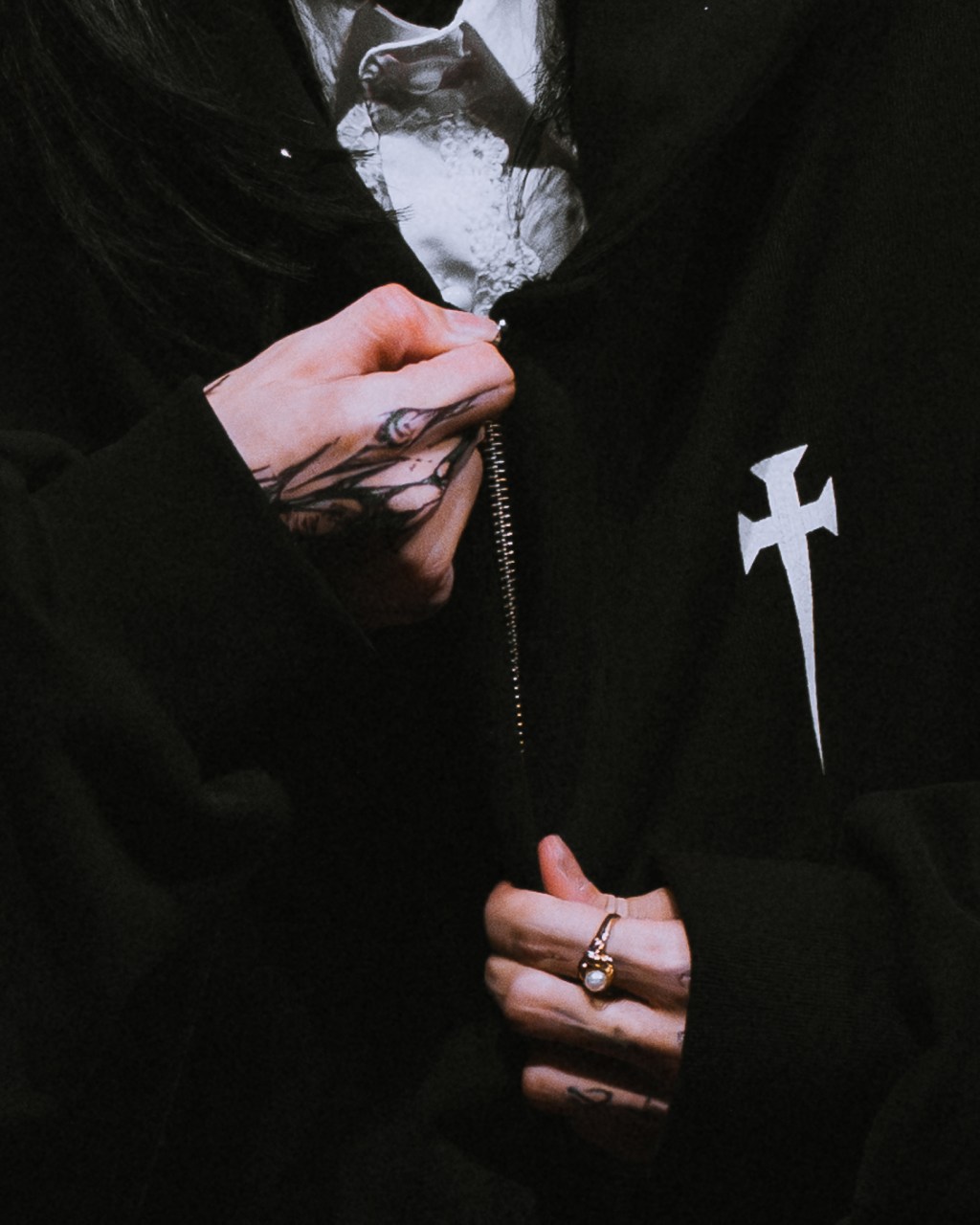
Hello and welcome back to HallyuTones — always focused on sound, stage, and substance.
In the process of learning about how our favourite records come to exist, we find that the person behind the track often has just as intriguing of a journey as the performer. For most fans of K-pop in particular, their attention and affection is generally directed towards the person who goes on stage and presents the music or creations that have been chosen for them. Sometimes, they get to participate in the process behind the curtains with other industry creatives. Other times, they rely on the guidance and expertise of lyricists, vocal coaches, composers and producers.
In the best case scenario, these creators become household names themselves. RAYE, Salem Ilese, Victoria Monét, Dem Jointz, ADORA are all examples of people who gained popularity from writing and helping to produce the greatest hits of artists and performers worldwide. Other times, the journey to working on production comes from witnessing and watching from the fringes.
For many idols, their onstage performances and studio recording sessions introduce them to various parts of music and performance production. Some examples include playing different instruments, lyric writing, vocal arrangements, and composing. For Jang Yijeong of the boy group HISTORY, it was a life changing vocal injury that led to much introspection about what it means to be a musician.
The guest of today’s interview is someone who has no shortage of experience both behind the scenes, and on stage. From idol performer, to producer turned DJ, EL CAPITXN is arguably one of the Korean music industry’s most recognisable names. His credits range from incredible soloists like IU, and UMI to working with rising groups like ARTMS, Triple S, NOWZ and plenty others. More recently, he released his own digital single titled ‘Breaking Through’ with vocal assistance from some very exciting guests.
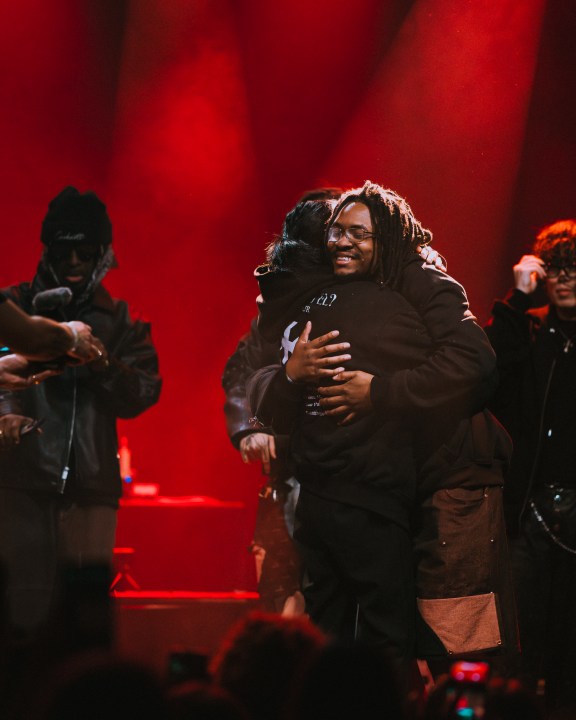
Formerly a BIGHIT inhouse producer, EL CAPITXN has been at the forefront of VENDORS, a production company he runs with colleagues, since 2024 as he continues to expand his track record. Recently back from his headlining world tour that asks the question ‘Who Killed El?’, he took some time to answer questions that the team and long time listeners have had.
Welcome to HallyuTalks, EL CAPITXN.
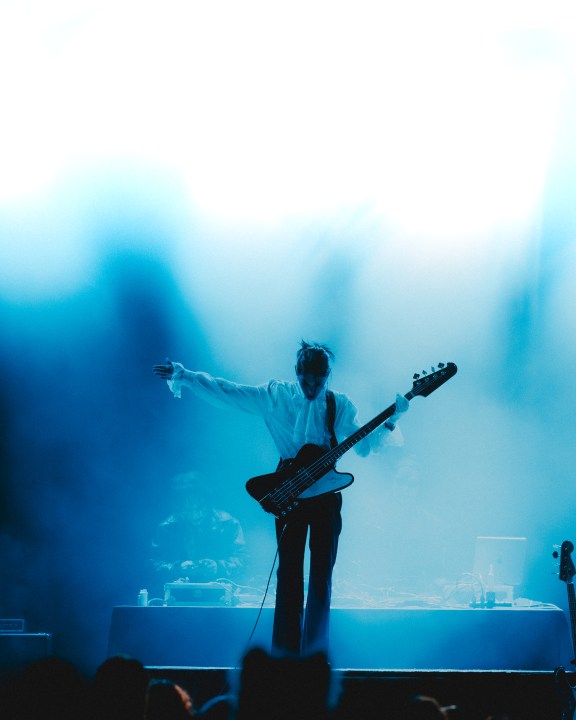
Interview
- Hello and welcome to HallyuTones. Please introduce yourself to our readers.
My name is EL CAPITXN. I debuted as a singer, survived longer as a producer after going through some unexpected challenges, and now I’m back on stage under my own name. Some may know me first as a producer, others as a DJ or performer, and still others may remember me from my past activities. But from my perspective, the phrase that most accurately describes me is, ultimately, “a person who has persevered through music.”
Whereas my goal used to be simply to create good songs, I now place greater importance on the scenes those songs actually create and the emotions they leave behind. I don’t want to create music that is merely consumed as content. I want to make music that lingers in someone’s memory for a long time, or at the very least, leaves a distinct mark for even a single moment. Even now, I don’t consider myself complete. Rather, I’m in a constant state of change, a process of continuous redefinition. That’s why I think it’s more accurate to describe the current EL CAPITXN as a work in progress rather than a finished product.
- For those who may not know, you were previously active as an idol in the group HISTORY. What has your experience as an idol taught you that still comes up in your solo journey?
To be honest, I think it was one of the most foolish periods of my life. But at the same time, it was also the most important. The choices I made back then, the regrets, and the moments that slipped by without my fully understanding them—all of that shaped who I am today. There are many scenes I’d rather forget, but I cannot explain who I am now without that time.
In particular, the period after my debut when I was gradually losing my voice was more than just a crisis for me. For someone whose job is to sing to find themselves unable to sing—that wasn’t something that could be explained away as a technical issue or a shift in career direction. It was a crisis that shook the very foundation of my existence. Back then, I hardly ever showed those emotions. Revealing them wouldn’t have solved anything, and at the time, simply holding on was more important.
If there’s a difference now, it’s that I no longer hide them. Whereas I used to think that hiding my emotions was a sign of strength, I now believe that revealing them as they are might be a more accurate and stronger approach. That experience continues to influence my journey as a solo artist; everything from how I stand on stage, to how I write songs, to how I connect with people. I don’t want to sugarcoat that period. But one thing is clear: the regrets and losses from that time are what have shaped who I am today.
- With over 10 years of experience in the music industry you have been able to work in various positions both behind the scenes and directly on stage. How does your approach to each role differ?
I used to think the two were completely different things. I suppose I believed that what happens behind the scenes was the creator’s job, while what happens on stage was the performer’s. But as time has passed and I’ve gained experience in various roles, I no longer see it as such a simple division. Ultimately, I believe both are heading in the same direction. They are alike in that they involve deciding what emotions to evoke, what to leave behind, and where to apply or withdraw energy.
That said, the experience is definitely different. In the studio, it’s more about making choices. I constantly take and repeat decisions like what sounds to keep and what to discard, whether to express certain emotions directly or hide them, and how intricately to craft the structure. On the other hand, on stage, I have to prove the choices that have already been made through emotion and energy. I get to see right then and there whether it actually reaches the audience and whether the flow I envisioned comes alive in the moment.
And realistically speaking, it’s not as easy as it sounds. A very long time has passed since I last stood on stage, and my sensibilities have changed significantly during that time. I couldn’t just go back to the way things were before. So even now, there’s a lot of trial and error. With every performance, I’m rediscovering my feel for it, and I’m constantly grappling with how to reconcile my creative work and my live performances within the same person. But one thing is clear: I don’t want to be someone who excels at just one of the two. I want to be someone who embodies both the meticulousness behind the scenes and the tension on stage.
- Which songs from your discography do you think best present the personality Jang Yijeong, the man behind EL CAPITXN? Choose 3.
I’d like to mention “Daechwita,” “Girls Never Die,” and “Breaking Through.”
First, “Daechwita” was a song that was difficult to create from start to finish. That’s why I feel it’s the song that best represents me. Looking at the end result, it’s a track that exudes strong energy and leaves a lasting impression, but from my perspective, what remains most vividly is the determination I had to persevere and push through until it was finally completed. Some projects are solved through technique or intuition, but others are ultimately completed by the attitude of the person who pushes through to the very end. For me, “Daechwita” was closer to the latter.
I think “Girls Never Die” is a song that reveals my personality and tenacity more directly. I believe I have a strong inner drive to try again even after failing, to never completely give up even when things aren’t going well, and to keep going even when the results aren’t immediately visible. That attitude is well captured in that song. I’m not someone who always moves forward in a cool, perfect state; I’m closer to the type who keeps moving forward even when I’m broken. In that sense, this song describes me quite accurately.
And “Breaking Through” is special to me. It’s literally a breakthrough. It embodies the way I live, the way I pursue what I love, and my attitude of moving forward no matter what. Above all, this song marks the very beginning of my career as an artist. Ironically, even though it’s a song I released, I was in a state where I couldn’t sing it myself, so it’s also the first song where I told my story through another singer’s voice. That was incredibly symbolic to me, the fact that someone who had lost their voice began telling their story through another voice. So, I don’t just consider these three songs to be favorites; I believe they best showcase the different facets of who I am.
- Your performances often feature a variety of art styles from playing decks, instruments, and even having virtual artist collaborators. Can you tell us how this has defined your position as a ‘hybrid DJ performer’?
It wasn’t as if I had planned from the start to become a “hybrid DJ-performer.” If anything, it was quite the opposite. It seems I just naturally ended up that way as I went along. At some point, the rigid standards that say a DJ must be this way, a producer that way, and instrumental performance must be kept separate began to feel meaningless to me. I came to believe that, for anyone working with music, it’s more important to draw upon the language needed at the moment.
Once I adopted this mindset of not drawing boundaries, I wanted to try more things, new and diverse things, in my performances. I didn’t want to simply play back music; I wanted to perform live, design the atmosphere, and incorporate visual and narrative elements as well. I don’t want to view the stage as a mere sequence of songs. I believe there should be a flow, tension and release, and scene transitions. As a result, decks alone weren’t enough, nor were instruments alone, and other forms of collaboration and direction naturally began to blend in.
I see my current approach not as a position created to follow a trend, but as the result of the methods I needed accumulating over time. I want to be someone who uses multiple languages simultaneously when necessary, rather than someone who speaks only one. And I believe that’s the closest way to describe my performances today.
- Does your listener profile change between what you listen to for fun and what you listen to for creative inspiration?
It changes. It’s not so much that the range of music I listen to changes completely, but rather that my attitude toward listening changes. When I’m just enjoying music, I tend to let my emotions guide me. I take it in by focusing on how the song makes me feel, how naturally it flows, and what images come to mind in that moment. On the other hand, listening for work is much more meticulous. I find myself constantly analyzing things like why a particular sound was placed there, why a chord progression flows the way it does, or why a hook immediately grabs your attention.
There are songs that I initially just feel are good, but when I listen to them again from a creator’s perspective, they look completely different. I don’t just focus on whether the melody is good; I look at how calculated it is, where spaces were intentionally left, and at what points the listener is kept engaged. So, even when listening to the same music, the experience is completely different when I’m enjoying it versus when I’m analyzing it.
But I don’t want to completely separate the two. If you listen too analytically, you might miss the music’s instinctive power, and conversely, if you listen purely with emotion, there are times when you can’t understand why it works. Ultimately, I believe you have to do both. For me, the best approach is to react emotionally first, and then dig into why that reaction occurred.
- Who are your favourite artists to listen to?
I don’t have a specific set of artists I always listen to. It depends on my mood and the direction of my work at the time. That said, there are certain artists I’m consistently drawn to. They’re the kind of artists whose world you can sense the moment their music starts playing, without needing any explanation. Whether it’s the sound, the vocal tone, the lyrics, or their overall attitude, I love people who create music that makes me instantly think, “This is them.”
Also, I’m more drawn to music with a clear sense of identity than to music that’s simply well-made. There’s music that’s technically perfect but doesn’t stick with you, and there’s music that’s a bit rough around the edges but strangely stays with you. To me, the latter is more important. While technical perfection is certainly important, I believe what ultimately makes an artist memorable is the clarity of their taste or the distinctiveness of their attitude.
So when asked about my favorite artists, I think it’s more accurate to say they’re people with a distinct identity rather than answering by genre or nationality. I listen to and enjoy that kind of music, but at the same time, I find myself constantly wondering why it endures. There are moments when I listen just like a fan, but there are also many times when I listen to understand it as a creator.
- What have been the biggest changes that you’ve noticed in the Korean music, or entertainment industry at large since you first chose this career path?
The biggest thing I notice is the pace. Everything has become much faster—the speed at which music is created, released, consumed, and evaluated. Competition was fierce even before, but now that pace has become even more compressed. Success comes quickly, and so does obscurity. So, from a creator’s perspective, I feel like the pressure has become much more complex.
On the other hand, there are positive aspects as well. We can now experiment with a much wider variety of approaches than before, and we’ve created an environment where we’re no longer limited to just the Korean market. Genre boundaries have blurred significantly, and there are many cases where music connects directly with a global sensibility. So, I definitely think the opportunities themselves have expanded.
However, at the same time, I feel that there are more instances where speed is mistaken for value. Just because a track gets a quick response or the numbers move fast doesn’t necessarily mean it’s music that will stand the test of time. These days, I believe “how long it lasts” is far more important than “how quickly it breaks out.” Ultimately, I think music that people return to over time, and artists who resurface, are the ones who are truly strong.
- Are there any fan interactions that stand out to you from your variety of in-person appearances?
I suppose what stays with me the longest are the moments when people tell me they got through tough times thanks to my music. Whenever I hear that, I feel not just happy, but also a bit weighed down. It means my music has actually been a part of someone’s life. I don’t always set out to create music with that specific outcome in mind. But when I hear firsthand that, for some people, a song isn’t just a nice tune—it’s something they needed to get through a particular period of their lives—it changes how I think about it.
The moments I meet people in person on stage also stay with me. Every time I see people I’ve only ever seen on screens or as numbers reacting right in front of me, I’m struck anew by just how different it feels. Especially in cities I’m visiting for the first time, where the language and culture are different, those moments when we connect on the same wavelength leave a much deeper impression than I expected. Ultimately, I realize that the way music connects people is far more direct than I ever imagined.
I don’t take my relationship with fans lightly. That said, I don’t want to describe it solely with sweet, pretty words either. For me, the sense that we’ve truly shared each other’s time is more important. That’s why the encounters that stick with me are mostly the moments that were genuine, even if brief, rather than those where emotions were exaggerated.
- What are some goals that you’ve previously set that you have reached or feel that you are close to reaching?
I’ve long had the goal of creating a stage in my own name. While producing music for others was important, and the process itself held great significance, I’ve always wanted to design a stage under my own name and prove myself through it. Now that I’m on tour and meeting people under my own name, I feel I’m getting closer to that goal.
However, I don’t view achieving a goal as the end. Rather, I see it as more of a beginning. Creating a stage under my own name isn’t something that ends after a few performances; I believe it’s about continuously building the conviction that “you have to see this person’s show.” I feel that I’m currently in the stage of laying that foundation.
Another aspect is ensuring that the time I’ve spent as a producer and the time I’m spending standing on stage again as an artist aren’t seen as separate, but rather as a single, cohesive identity. I don’t want to explain those two things separately, because they are both me. I feel that right now is a time when those two worlds are gradually becoming connected.
- Your credits on tracks are across genres and even include many international artists. What are some key things you consider before working on a particular project?
I first consider whether the project is necessary for me. I don’t think there’s much meaning in simply participating or having my name listed. I first assess whether my involvement will make a difference, whether my role is truly needed, and whether there are aspects that absolutely require my participation. If not, I don’t see a reason to join.
I also place great importance on what I take away from the project once it’s finished. I’m not just talking about tangible things like money or credits. It’s often more important to consider whether the project helps me move to the next level, whether I gain new insights, or at the very least, whether my own standards become clearer. Some projects may seem big on the surface but leave little of substance, while others can provide an experience far greater than their scale.
Another factor is people. After all, collaboration isn’t just about skill. No matter how promising a project may be, it’s hard to achieve good results if our directions or attitudes are too different. I place a lot of importance on a person’s standards and attitude during the music-making process. While technical skills can be aligned to some extent, I believe it’s difficult to work together long-term if our standards are too different.
- Many fans have come to know you through your work for the many artists under the HYBE label, especially the relationship with SUGA of BTS that gave us insight to EL CAPITXN through the show ‘SUCHWITA’. Following that vulnerable conversation, what has been the most eye-opening experience about sharing your story in such a sincere way with friends?
What struck me most was realizing that far more people share similar feelings than I had imagined. Although everyone’s circumstances are different, I sensed that our experiences, whether it was a time when we felt completely overwhelmed, anxieties we couldn’t voice, or the struggle to keep going on the inside even when we appeared fine on the outside, overlapped more than I expected. I also learned that even if we don’t articulate these feelings perfectly, they often resonate more deeply when we express them honestly.
There was a time when I thought revealing my vulnerabilities was a weakness. It’s especially easy to feel that way in this industry. But as time went on, I began to think that speaking honestly without sugarcoating my emotions might actually be a stronger approach. Of course, I don’t need to say everything, but pretending to be strong while erasing the parts of myself that are genuine no longer felt right for me.
So, what stayed with me most after that conversation was the realization that honesty doesn’t necessarily lead to weakness. Sometimes, it reveals a person more accurately and leaves a lasting impression.
- On ‘SUCHWITA’ it was mentioned, and as fans of HISTORY may know, you went through a life-changing experience that caused you to change your entire career’s direction. What were some of the feelings you experienced at that time, and what has helped you stay committed to music since then?
At the time, I truly felt like everything was over. It wasn’t just a vague sense of hardship; it felt more like the life I knew had completely collapsed. I had lived my life as someone who had to sing, and that foundation had been shaken. It’s hard to describe that feeling simply as sadness or a sense of injustice. I felt a sense of emptiness, I felt anger, and there was a long period where I refused to accept what had happened.
But strangely enough, I couldn’t completely let go of music. To be precise, I don’t think I kept going because I loved music so much that I wanted to continue doing it beautifully. It was more that I simply had no other choice. I couldn’t define myself without music, and in the end, that was the place I always returned to. That’s why I don’t want to talk about music in purely romantic terms. To me, music wasn’t so much a dream as it was a reality I always ended up returning to.
The driving force that allowed me to keep going afterward wasn’t some grand hope, but rather a desire to see it through to the very end. I wanted to know if this was truly the end, or if there was a way to return, even if only in a different form. I’ve kept going with that mindset. Looking back, it seems that persistence is what brought me this far.
- Many fans of Korean music and culture often comment on the cultural fusion that happens more frequently now as the HallyuWave has grown. What do you think is a key part to retaining a sense of individuality in such a culturally rich setting?
Ultimately, I believe it comes down to one’s own standards. Rather than which culture you incorporate or which genres you blend, what matters more is whose perspective you use to interpret them. These days, so much is accessible, and there are so many references to draw from. While that’s a good thing in itself, I think without a clear standard, things can easily end up looking alike.
I don’t view cultural fusion as a bad thing. In fact, I think it’s only natural in this day and age. What matters is how you approach it. There’s a big difference between merely borrowing the surface elements and filtering them through yourself to recreate them in your own way. Ultimately, I believe it’s the latter that endures.
I believe personal identity isn’t born from grand declarations, but is revealed through repeated choices. Things like what sounds you like, what emotions you want to leave behind, and what you decide not to do, these accumulate to form your unique style. I think that’s what matters most.
- As a DJ you have performed at some of the biggest music stages in the world including Water Bomb and ULTRA in Seoul, ATOM in Tokyo, as well as the LOLLAPALOOZA Brazil After Party. Are you ever influenced by the local culture or soundscape of the places you visit when you make music?
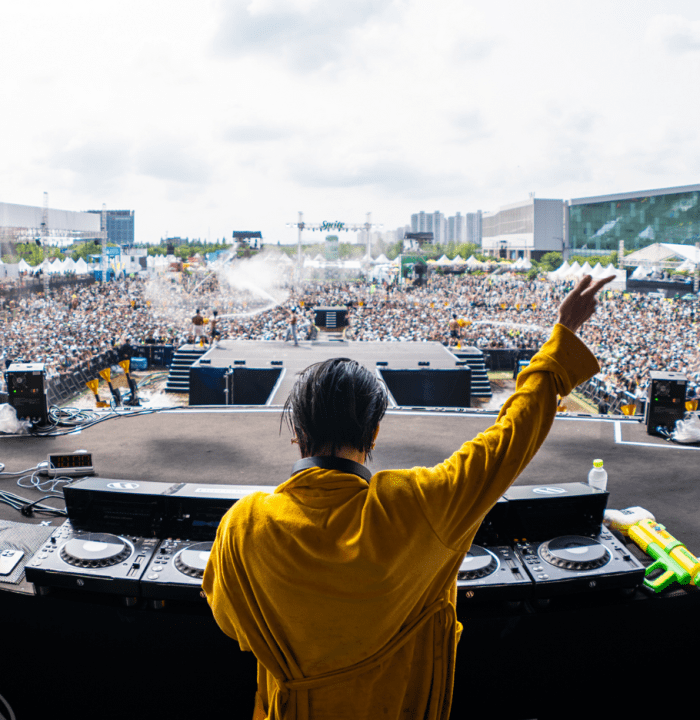
I don’t necessarily think, “I need to capture the sound of this city.” But the atmosphere of the space, the audience’s reaction, and the unique rhythms of each city definitely leave a mark on me. Some cities react much more immediately, while others gradually draw you in before exploding with energy all at once. As I continue to experience these differences on-site, they naturally influence my work later on.
I tend to remember these things as sensations rather than storing them as facts. For example, rather than recalling where I heard a specific drum pattern, what stays with me is the pressure or heat I felt in a certain city, or the way people’s bodies moved. And those sensations often subtly seep into the energy or structure of a song later on.
So I can’t say there’s no influence at all. It’s just that the influence doesn’t manifest as superficial borrowing, but rather operates as a form of energy retained in my memory.
- Of these grand stages, is there one that is the most memorable?
It’s not easy to pick just one, but if I narrow it down to recent performances, the first show of this tour definitely stands out the most. The reason isn’t simply the scale of the event; rather, that stage was a place where I had to prove to myself that I was truly beginning. It wasn’t just a matter of pulling off a single performance well; I see it as a moment where I confirmed to myself that “I’m really going out there under my own name now.”
Big stages stick in my memory in different ways. Some stay with me because of their overwhelming energy, some because of unexpected reactions, and others because of personal emotions. But the first show is always different. That’s because I have to confirm all at once whether the preparations actually work, whether the world I envisioned comes to life on stage, and whether the audience feels it too.
That’s why the opening night of my recent tour felt less like a performance and more like a declaration. In that sense, it remains one of my most memorable moments.
- You are currently embarking on a tour, titled ‘Who Killed EL?’ with stops in Asia, North and South America, as well as Europe now on the horizon. Can you tell us why you chose this name for your first headline world tour?
This isn’t just a title; it’s a question. And that question was incredibly important to me. The phrase “Who Killed EL?” isn’t merely a catchy headline; it’s a way of asking what journey I’ve been through, what has changed me, and who the person standing on stage today really is.
I didn’t want this tour to be just a series of performances. I wanted it to have a structure and a flow, drawing the audience deeper and deeper into that question. Ultimately, this tour is more like a work that shows the process of one state from the past ending and a different way of being beginning. That’s why I don’t think this title is just a well-chosen name; I believe it’s a question that was absolutely necessary.
And I don’t want to explain the answer fully in an interview. If I were to wrap it all up in words, it would leave less for the stage to do. I hope the audience will feel that answer directly within the performance. This tour is a process in which the stage answers that question on my behalf.
- Are there any tour experiences that you are currently looking forward to in various cities?
What I look forward to most is the reaction of audiences I’m meeting for the first time. Even with the same music, the way it’s received varies completely from city to city. In some places, the response is incredibly immediate, while in others, the audience watches quietly at first but then bursts into enthusiasm at a specific moment. I find it truly fascinating to experience those differences firsthand.
Another great thing about touring is that I can constantly see how the structure of a performance which previously existed only in my head actually works in front of a live audience. In every city, I learn anew where the audience gets drawn in, where reactions differ from my expectations, and what transcends language to resonate with them.
Ultimately, I’m not going to consume the city; I’m going to see how my music comes to life in a different place. So, what I’m looking forward to on this tour isn’t sightseeing, but the audience’s reactions and moments of connection, rather than the act of traveling itself.
- What do you hope that people who may not know you learn about you through this interview?
I hope you’ll sense not so much what genre I work in, but rather the attitude with which I approach music. I don’t want to define myself by a single genre. Instead, I believe what truly defines me is the principles that guide my actions, the choices I make, and the things I refuse to compromise on.
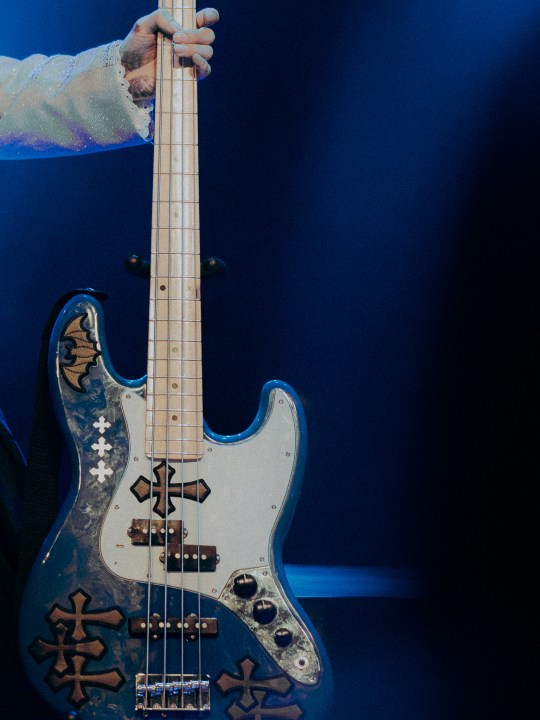
I also hope you’ll sense that I’m not just someone who suddenly appeared on stage, but someone who has persevered behind the scenes for quite some time and has survived within the music industry in various ways. My career isn’t a neatly linear story. I’ve taken many detours, faced many setbacks, and kept moving forward in different ways. I believe that complex path itself is what has shaped who I am today.
So, through this interview, I hope people don’t just conclude, “Oh, this person has this style,” but at the very least feel that “this is someone who has gone through far more than I expected.”
- What advice do you have for people who want to get into the world of music production but are intimidated by the many options that exist?
I hope you don’t try to make the perfect choice right from the start. These days, there’s so much equipment, so many programs, and so much information that it’s easy to feel overwhelmed before you even begin. But the truth is, you won’t know most of it until you try. You’ll only discover what works best for you, what sounds you truly love, and what kind of creator you are by actually giving it a shot.
That’s why I believe just getting started is more important. It’s far more important to quickly gain experience by making choices and adjusting them than to avoid making the “wrong” choice. After all, almost no one chooses the path that’s perfectly right from the very beginning. What matters is whether you’re someone who can keep refining your approach.
And for those who get stuck facing too many options, I’d actually advise them to narrow down their criteria. Don’t try to do everything perfectly from the start; just start with one sound you like best right now, one mood you most want to create, or one aesthetic you most want to emulate. A simple start is what keeps you going for the long haul.
- Do you have any final words for your fans and new listeners?
To everyone who has known and supported me up until now, I want to say that you’ve spent far more time with me than I ever realized. There were many moments I couldn’t fully express in words, and many times when I felt I couldn’t give back as much as I should have, but one thing is certain: those moments are what brought me to where I am today.
And to those who are just getting to know me, I want to say that what you see now is not the whole picture. I am still a work in progress, and I actually feel like I’m just getting started. Whether you’ve known me for a long time or are seeing me for the first time, there is so much more I have yet to show you.
We’ve only just begun.
The most interesting part of EL CAPITXN’s answers to me is how he echoes a greater conversation happening in the world today. In the world of music, and beyond, things are becoming so fast paced that it’s often hard to keep up with what is true to how we feel, and how we want to show up. For EL, the sensation is a core part of the creative process; it helps to shape the story being told through his work.
From the passion in his responses, and his concern with sincerity, it is clear that EL never died, he simply keeps evolving. As listeners, often the stories that inform our favourite tracks serve as complimentary to the instruments and the lyrics. In the case of EL CAPITXN, not being able to use his voice is what makes it important that the soundscape of a piece also conveys feeling.
After a time of having to rediscover who he is outside of his singing voice, Jang Yijeong has proven that passion is often what sustains us. Even when the highs turn into lows where all we gain is a lesson in endurance, our passions are what make us people.
In the era of fast fashion and generative AI, humanising the people who craft the parts of our daily lives has become even more important. As our previous guest EMBA said, music is everywhere and teaches us so much about ourselves. Each component carries the experiences of the people who come together to put them together. It is this that makes art resonate with different communities. It will always be refreshing to see that the people who make some of our favourite records are also focused on keeping the heart of human emotion and creativity at the core of what they do.
Thank you to EL CAPITXN for the earnest answers to our questions, and another thank you to the CLV team for co-ordinating this interview and taking the time to reach out amidst the busy tour era. We wish EL the best for all the tour stops still on the horizon.
To keep up to date with all things EL CAPITXN:
Disclaimer: The original answers to the interview were received in Korean and we have taken as much care and time as possible to ensure that we have represented the artist accurately across the language gap.
All artist photographs have been generously provided by C’est La Vie Agency.
Photographer: Roxy Faith Alexandria


Leave a Reply