

Hello and welcome back to HallyuTones – always focused on Sound, Stage and Substance.
K-Pop is renowned for it’s high-energy performances, memorable stages, mesmerising visuals and catchy songs. But behind every top tier group, every incredible stage and every hit song are an essential team of music industry professionals.
Today’s interview is with Billboard #1 producer and songwriter Alina Smith of LYRE . With popular hits like ITZY’s ‘Mafia in the Morning‘, Kep1er’s ‘Giddy‘, Purple Kiss‘ ‘Sweet Juice‘ and BLACKSWAN’s ‘KARMA‘ to her name, she has built a reputation for crafting exceptional K-Pop songs.
Read on below to find out more about Alina’s career, her favourite artists, and advice for any new producers looking to get started and level up their production skills!
Interview:
(Answers below are transcribed from a Zoom conversation, with some editing for clarity – writer’s additions are shown in brackets [] ).
Q1. Please introduce yourself and your music!
Hi! My name is Alina Smith. I am a writer, producer, artist and content creator. I have been making music for a very, very long time. It’s about to be 21 years (and before that I was touring in a kids singing group) so I can say I’ve been making music my whole life!
I’ve made music all over the globe. I’m from Europe originally, so when I was a child I was making music there. I have also lived in Nashville, Los Angeles, New York, making music in all these music cities. A few years ago, I got into song writing and production for K-Pop. I have also worked in adjacent genres like J-Pop, C-Pop and Thai-Pop!
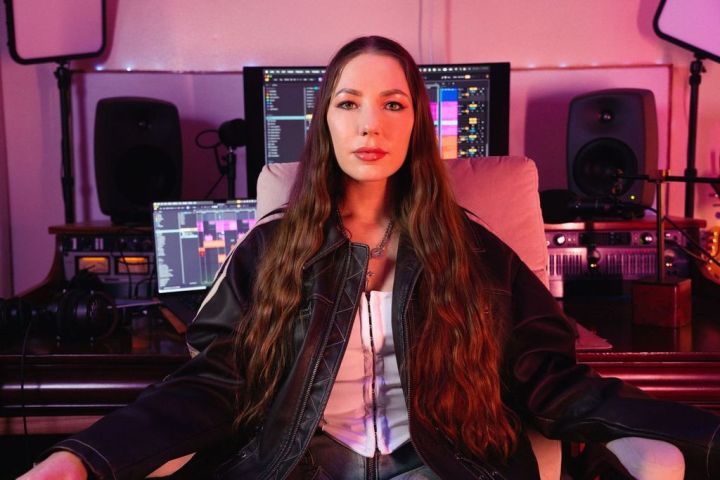
Q2. How did you first get started in music/music production?
When I was very young I performed and sang with a youth music group. When I first moved to the States, I thought I would be a big star, releasing records. However, I very quickly discovered that in order to make records you need a producer to record you and make the instrumental. I did not have anybody. I scraped together money and tried working with a few people but did not find anyone who matched with me.
At one point I decided ‘How hard could this be?’ and while it was very hard, I learned to do it myself. It was very tricky, so part of what I do now is teach young producers how to get that polished sound a little bit quicker. There is honestly no skipping the work, but there is skipping the over work. Learning production takes a lot of hours, whether working with a teacher who is cutting out the things you shouldn’t be doing or by yourself, it’s still a challenge.
Q3. Who was the first K-Pop artist you worked with, and how did this collaboration come together?
My first K-Pop artist I worked with was Red Velvet, but my first artist in Asia was a long time before that, a J-Pop artist called Aisha. I was 19/20 years old, and I met a celebrated Japanese producer on Craigslist. Back then it was normal for producers to put adverts on Craigslist looking for songwriters. So I saw that and I contacted him and he sent me some tracks. I wrote top line (the song written specifically over the beat, where the melodies match the beat) and he placed them with Aisha.
Many years passed, but what ended up happening was I was in a precarious situation with my publishing deal. They wanted me to get more success but did not know how to help. I remembered the cut in J-Pop with Aisha and that I enjoyed it. My friend Elli and I got together, made a few songs and we got that cut placed with Red Velvet within 2 months of starting to write for K-Pop.
It was a combination of things – I do feel we had a natural gravitation to the genre. At the same time, not many writers from the west were writing for K-Pop so there weren’t as many songs available, so it was also a product of the time.
Q4. Is there a difference between producing for K-Pop versus Western pop?
The biggest difference [with K-Pop] is that most songs are written for a group, so because of that you need to create a song that fits a group. So each member has a different voice, a different thing they bring to the table. Some are singers, rappers, some have more vibey voices, so you need to give every member parts to shine on. Because of that you have more varied sections. The verse, pre-chorus and chorus could all have different vibes. Western music is a bit more simple, where dynamics between sections have more slight changes. There are always variations in every genre, however these are the general cliches.
Q5. What is the typical song production process from pitch to final release?
With Asian markets it’s rare that they approach producers or song writers to hire you for a record. They usually ask you what you have that may fit what they are looking for. They send you a ‘brief’, a written memo of what they are looking for saying for example ‘we want a song that is R&B, with impressive high notes’. It’s a rough guideline based on what they feel their artist needs or their concept. In essence it’s a song search or treasure hunt for songs that fit their brief.
We then look through our catalogue and send them whatever we have that fits. Some people custom write to the brief, I personally don’t like doing that because it may not be exactly what they want. I tend to look at the generalised vibe and see what I have that fits the vibe. That approach works way better most of the time than the super specific examples. There are exceptions – competition shows are a lot more specific to fit the vibe of the show or the planned choreo.
It is very interesting how long it can take before a song is recorded. Like for Red Velvet it was immediate, but more common than that, songs are being pitched for years before finding a home (and very often they don’t find a home). It’s almost like gambling, because it’s not always the song’s quality. Songs do need to be good, but it often has to be the right time, group and vibe, and it’s not all in their control. I’ve had songs written in 2021 released in 2025 by groups that didn’t exist back then, so you just have to write and hope it gets picked up.
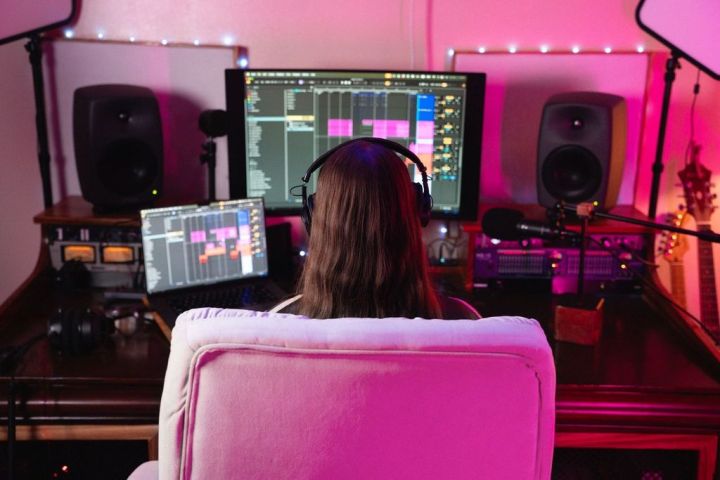
Q6. What song are you most proud of and why?
This is tricky, but not for the reasons you might expect. Honestly, I emotionally disconnect from the song the second it is done as the creator. I love the process of creating, I’m really into the song when creating it and a little bit after. As I move onto other things I love them, but I don’t love them as much as I did when creating. By the time they are recorded and come out it is a great feeling but not in the same way.
From an objective standpoint one of the songs in Kpop I really love that I created is called ‘Sweet Juice‘, for a group called Purple Kiss who’s activities are unfortunately coming to an end this year. I love that song. It was originally written for my music partner Elli to release as an artist. A lot of the times songs you create yourself for an artist, K-Pop want those songs the most. They really like the expression of someone’s artistry rather than trying to fit their style, and they get curious about it. ‘Sweet Juice‘ is a reflection of my style as an artist, producer, Elli and our team together. It always feels great when a song you’ve been working on is well received and loved.
(Alina also spoke about some of the songs that she had fun memories of creating. One of the recent songs that stood out to her was ALL(H)OURS’ ‘Bout That Issue‘. Speaking about this track Alina revealed ‘This song was originally written on a livestream in 2021 on my birthday and was originally called ‘Birthday Whistle‘! You can still find the footage of me putting together this track on my YouTube.’)
Q7. What are some of the challenges that you face and how do you overcome them?
There are a lot of challenges. The biggest is the uncertainty of the industry. I find this is true for really successful writers and producers as well as those starting out. You don’t know where your next hit is coming from, and who’s going to record what. It’s hard for those who like to keep organised and have a plan. That is the biggest life challenge for being a producer in any genre.
Creatively, I feel like people want to chase trends. There is a lot of pressure to do that. Labels push you in that direction by asking you to make songs based on what is popular, but the truth is the more artistic songs that feel like you or created from love are those that have the best impact overall. However, it is hard to go against the grain of so many people chasing trends. Pharrell is a good example of this. For a while he is hot as a producer, then disappears for years and then is hot again. He refuses to chase trends so when his style is popular he’s ‘in’ and when it’s not he’s doing other things. I really admire that.
Q8. You also release your own music as a solo artist. How would you describe your own music and style, independent of your other work?
My style is always evolving. There are a few constants in my style, like how I produce my vocals. I bring this approach to other artists but it originates for what I do for myself. Lots of maximalist vocal production, harmonies, ad libs and stacked vocals. I really focus on vocal performance and multiple layers through most songs. The message of my songs is a little bit more motivational/inspirational commentary on life rather than focusing on romance.
It’s interesting being a writer and producer for K-Pop. What I do there has definitely bled back into my artistry, and much of what I am releasing in the next year is influenced by that. Much of my audience are also K-Pop fans so I am also influenced by my audience. I always walk the line between retaining my own style and singing voice while playing around with different stylistic choices (Western or K-Pop style).
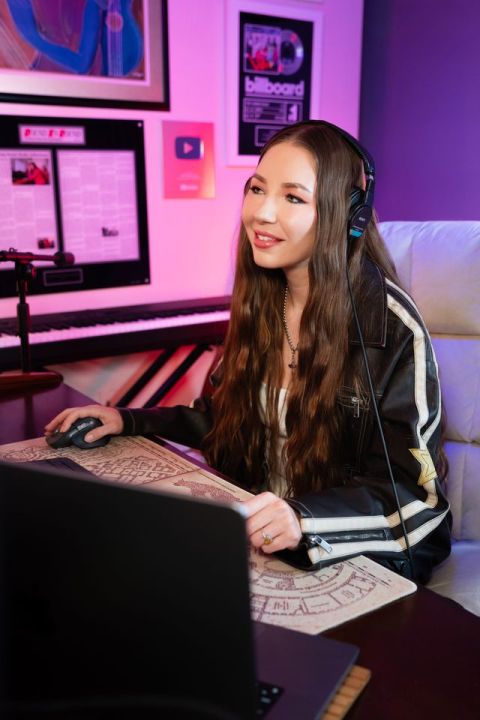
Q9. Who are your all time favourite K-Pop artists and why?
I enjoy a lot of older K-Pop groups that are no longer together. I really loved 2NE1, they were the first K-Pop group I really got into. I loved their hard hitting, girl crush vibes. I did get a chance to work with CL once. She actually came by to my house years ago. She was on a trip to LA meeting with songwriters, and she pulled up in a limo. I thought ‘Ooh you’re a diva! You’re fun!’. I just thought 2NE1 were really key for the development of K-Pop at that time and I still really love that music.
That ‘recession pop’ style of music is making a comeback. A lot of the kids in my Discord are asking how to make that ‘recession pop’ style even now. I also enjoy many of the groups that are popular now, like Aespa, who have a great style. [I also love] ITZY, I’ve worked with them and they have always been one of my favourites even outside of working with them. NewJeans (NJZ) are also really interesting and just a completely different style and that’s always good to just break things up. I don’t love trends and everyone sounding the same so it’s good when an artist comes out with a completely different style.
Q10. As a H1-KEY fan, I was amazed to find out that you worked on the track ‘Lowkey Scared but H1-KEY Ready’ for their ‘Seoul Dreaming’ EP. Could you tell us some more about the inspirations behind this song?
That song was originally written for Ava Max. It was called ‘Hourglass‘. We wrote a song as a team to pitch for Ava. She didn’t take it, it was in the catalogue for a year or so. One of the people I work with who send songs to different labels sent it to H1-KEY’s label and they wanted to record it!
I do remember a story to do with this song. One of the challenges when songs take so long to get picked up is making sure that you still have all the files. I always tell producers to back up all the songs you work on because it’s very hard to recreate a song exactly as it was. I opened up the old session and lo and behold, a bunch of the synths were missing and stuff was not working so I worked really hard to try and restore that song. They really loved it, picked it up and did their own thing. I was H1-KEY Scared and H1-KEY Not Ready (laughs)!
Q11. If you had one piece of advice for an aspiring K-Pop producer, what would that be?
This is going to be basic but key. Be really, really good. Have your tracks be on the level of the stuff that you aspire to do. Lots of people think that concessions are given to new producers, but unfortunately things are very competitive. I tell my mentees and people I work with that they are competing with me – I know it can seem unfair when someone has been producing for a couple of years and I have been producing for over 20, but when we are submitting for the same brief, we are competing.
The number one thing you can do is improve your skills. Relationships of course matter, but I find that when you are just really good, doors do open up because it is valuable. To be new and super dialled in with your sound, people will want to do things with you.
A secondary bit of advice is to not ignore getting yourself out there. If you’re extremely good but under a rock, never posting on the internet, never sending DMs or socialising, then no one will know who you are. Try to develop a bit of a community. For example I have a Discord server for producers, songwriters and singers. There are also a lot of people in there who are interested in K-Pop.
A fun story is that I livestream for my community every couple of weeks. The other day there was a group in my chat that had met each other through the Discord independently, and formed a song writing group to write for K-Pop. They submitted a song for the stream and I reviewed it and it was really great.
Q12. Lastly, do you have anything to promote for anyone interested in music production who may want to pursue this career for themselves?
I do have a course that people can take, it’s already on my website, alina.fm. This is a course for producers. [Before starting] you should be an ‘advanced beginner’, not completely new to music. You should know how to use a digital audio workstation, basic editing etc. If you’re an advanced beginner and up, this course helps you become more professional, a bit more polished with your sound. I’ve had over 1000 people take it! I’ve had amazing reviews, with people sending their songs before and after with a big difference.
Music Producer Crash Course – Sign up today to learn how to hone your production skills to bring your songs to the next level!
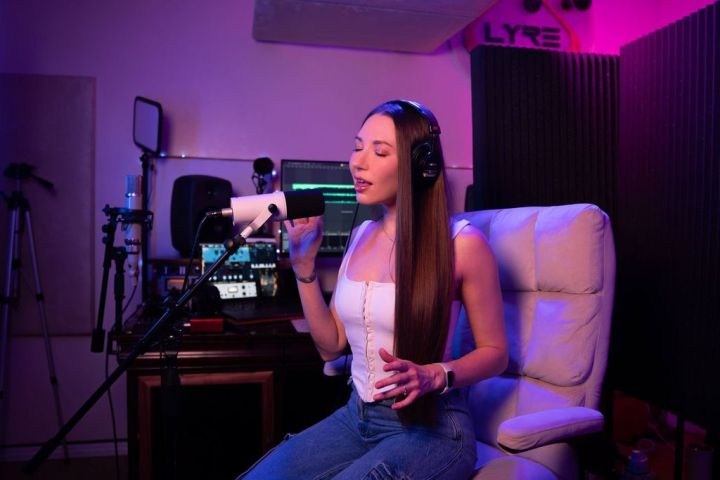
I’m also creating a vocal production course, which will be really good for anyone who wants to specifically produce for K-Pop. K-Pop production and song writing involves a lot of vocal layering because you are working with groups. There are harmonies, ad libs, so many vocal layers you have to be aware of and know how to put together. This course heavily focuses on that. It has many hours of learning how to record, edit and arrange vocals.
Early Access: Vocal Production Course – Sign up today for Early Access and begin your career in Kpop song production!
Thank you so much to Alina for taking the time out of her schedule to discuss her career and music production advice with us! This video was initially conducted via Zoom and I could feel the sheer energy and passion that Alina has for everything she produces. I truly hope that this interview inspires a few people to pick up some new skills and maybe some day work on some of K-Pop’s latest hits!
Alina’s Social Links:
Instagram: https://www.instagram.com/thealinasmith/?hl=en
LYRE Music Instagram: https://www.instagram.com/lyremusicgroup


Leave a Reply