
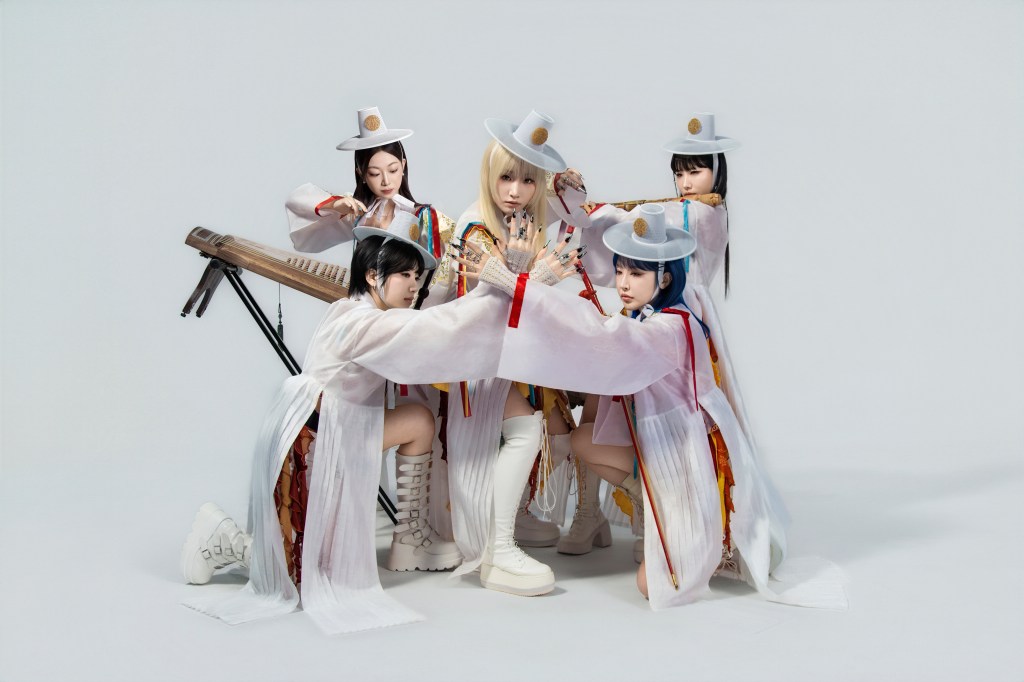
Hello and welcome back to HallyuTones – always focused on sound, stage and substance.
Today our GRANADA interview series continues with Part 2! Make sure to check out Part 1 here if you haven’t already. This part goes much further in depth regarding the formation of the group, their live performances, and their discography.
Grab a hot drink and a snack, and prepare to dive into the world of GRANADA – a band that truly define their own sound through a blend of tradition and contemporary music.
Read Part 2 of our interview below!
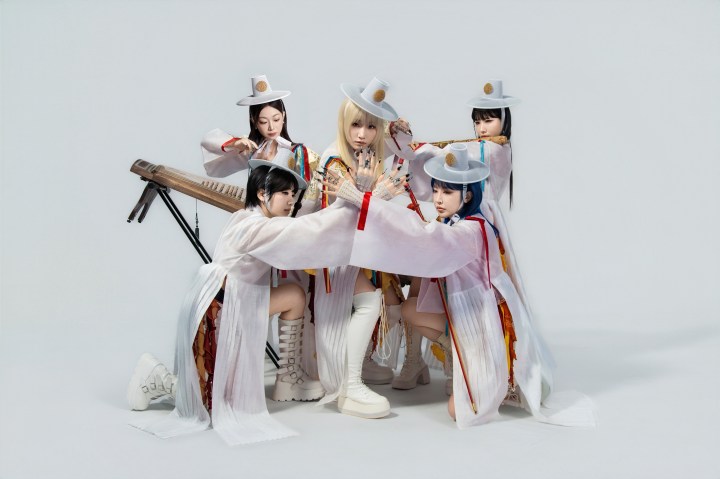
Interview:
Q7. What inspired each of the members to join the group, and what does ‘GRANADA’ mean to each of them?
Jenny: I naturally got started because I loved the people I was making music with. At first, it was simply about sharing music I loved with good people. But now, I feel so deeply connected to GRANADA that I want to devote myself to this group for the rest of my life.
To me, GRANADA is much more than just a band. It represents my youth, a part of my life, and something even more meaningful than that. Through GRANADA, I have learned about people and life, grown to understand music on a deeper level, and found a sense of direction for the kind of music I want to make and the person I want to become.
GRANADA continues to make me dream new dreams and gives me the energy and motivation to keep moving toward them.
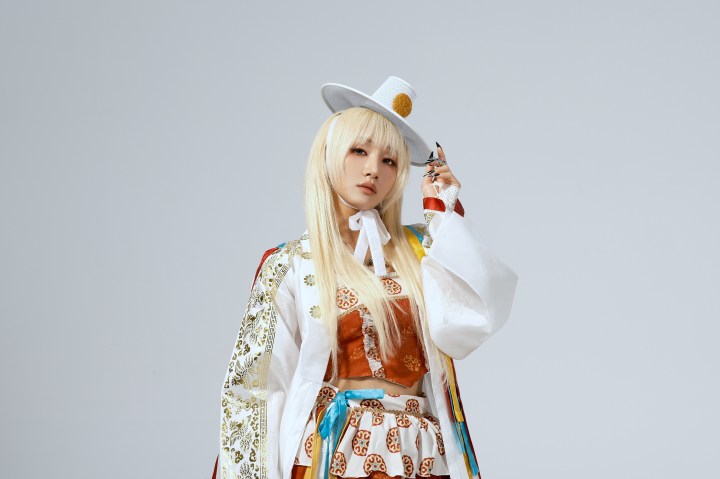
Dayeong: I have always had a strong thirst to explore different kinds of music. After playing the haegeum for many years, I wanted to challenge myself with different genres and express more of my emotions and creativity through the sound of the haegeum, reaching a wider audience.
I especially believe that music has no language barrier. I have always wanted to express my emotions through the haegeum, a traditional Korean instrument, and connect with people around the world through my music. GRANADA is the group that has allowed me to fully express and pursue that desire.
Through GRANADA, I have been able to explore various genres, including K-POP and EDM, and experience performances that combine music with choreography and stage production, as well as performances overseas. Little by little, I am discovering and bringing to life the possibilities of the music I have always dreamed of creating.
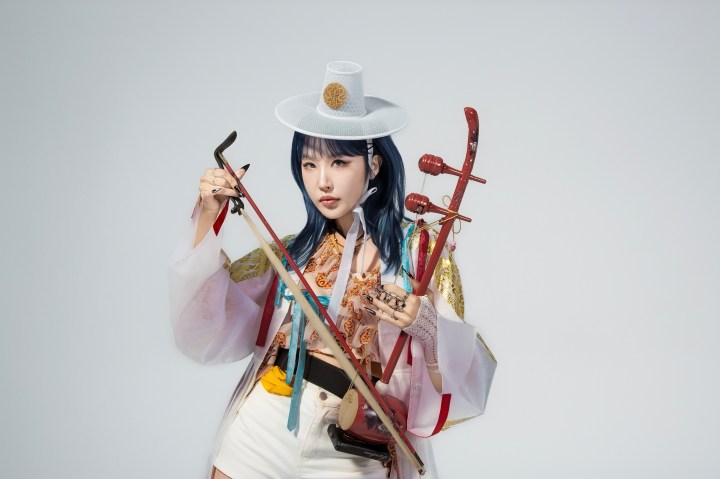
Subin: When I first joined GRANADA, I was drawn to the group not only because I love music, but also because I found the process of different people coming together to create a single piece of music exciting. Each of us has different strengths and slightly different perspectives on music, and I found it fascinating that when all of those differences come together, they create a completely new color.
As we have continued working together, I think the greatest meaning GRANADA has for me is “people who grow together.” There were types of music and performances that I might not have had the courage to try on my own, but with the other members by my side, I was able to take on those challenges. Watching each other grow has also inspired me and taught me a great deal.
In particular, the moments we share on stage—connecting with the audience and creating an atmosphere together through the music we have prepared—have gradually made GRANADA something truly special to me. Now, GRANADA means more than just a group that makes music. We are valuable colleagues who discover each other’s potential and work together to create better performances, and GRANADA has become a driving force that makes me want to keep making music.
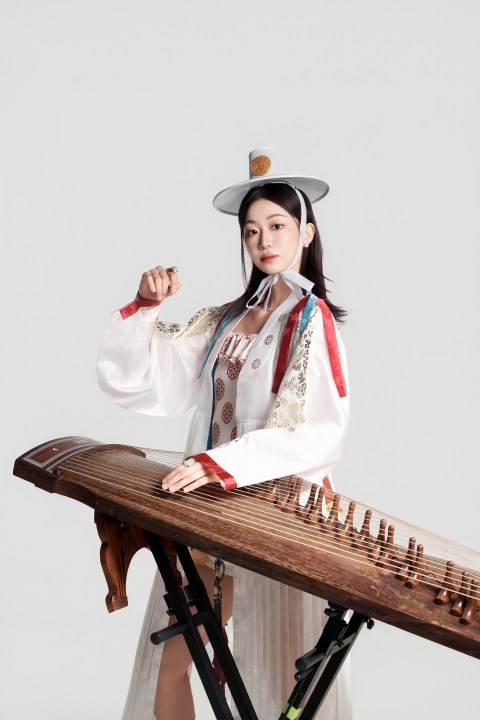
Hyogyeong: After playing traditional Korean music for many years, I naturally became interested in creating new music. I began to explore fusion music as I wondered, “Is there a way to make our music more accessible and enjoyable for more people?”
Then, through a great opportunity, I auditioned for the Korean traditional music band GRANADA and eventually joined the group as one of its current members.
To be honest, before joining GRANADA, I had never imagined myself standing up, moving around, and performing while playing my instrument. I had been so accustomed to sitting down and playing for many years that performing while standing and incorporating movement and performance elements was a completely new challenge for me at first.
But once I tried it, I realized that it suited me much better than I had expected. Through that process, I also discovered something new about myself—that I actually have much more energy and a lively side than I had realized.
In the past, I expressed my emotions solely through my playing and sound while sitting down. Now, I can move around the stage, make eye contact with the audience, and use my facial expressions, gestures, and performance to communicate through music. Although I am still playing the same instrument, I feel that the ways I can express myself and what I can show on stage have become much broader.
For me, GRANADA has been a major turning point in my musical life and a new beginning.
Through GRANADA, I have discovered that there is a much bigger world beyond the world of traditional Korean music that I had known. Seeing people of different nationalities and generations take an interest in gugak and enjoy and love our music made me realize firsthand, “Our music can connect with so many different people.”
At the same time, I discovered another side of myself that I had never known before. Through GRANADA, I feel that I have come to understand, for the first time, how much energy and how many different sides I have—not only as a performer, but also as a person.
Every time I connect directly with the audience on stage and see them enjoying and responding to the gugak we perform, my dreams become clearer. I find myself thinking more deeply about what kind of performer I want to become and what kind of performances I want to create in the future.
So, for me, GRANADA is more than simply a group I belong to. It is where I discovered a new side of myself that I did not know existed and learned to see a much bigger world. It is also something as precious to me as family, and someone—or something—I want to continue growing with in the future.
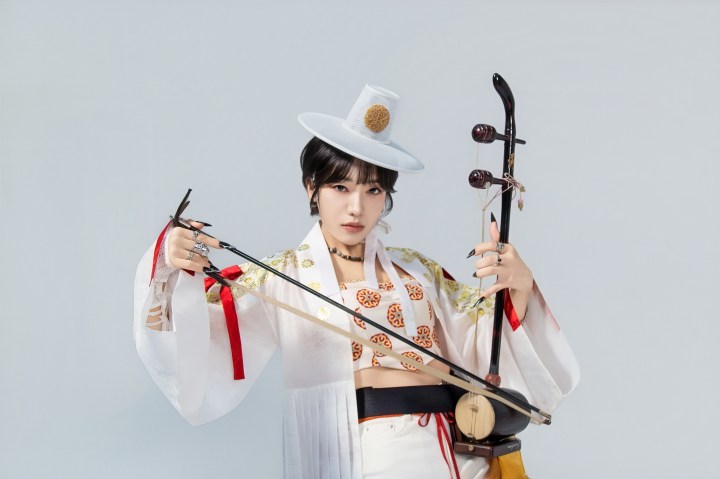
Jaehee: I enjoy sharing music with musicians who play different instruments, exchanging ideas, and learning and discovering new things together. That was one of the reasons I started GRANADA. As a daegeum player, I wanted to grow further and broaden my musical perspective.
Through my work with GRANADA, I have had the opportunity to meet professionals and artists from many different fields and gain experiences in areas I had never explored before, including different types of music, performances, and content production. Along the way, I naturally learned many new things, and my perspective on music has expanded considerably.
Above all, I have learned so much and feel incredibly grateful for the people I have met and the experiences I have had through GRANADA—people and experiences I might never have encountered otherwise. In that sense, GRANADA has been much more than a musical activity for me. It has been a major turning point in my life, allowing me to grow both as a daegeum player and as an artist.
I am proud to be the daegeum player of GRANADA. I want to continue learning and growing, while creating music that is uniquely GRANADA’s own, so that people around the world can naturally discover and enjoy GUK-POP—the meeting of traditional Korean music and contemporary music—as a genre of its own.
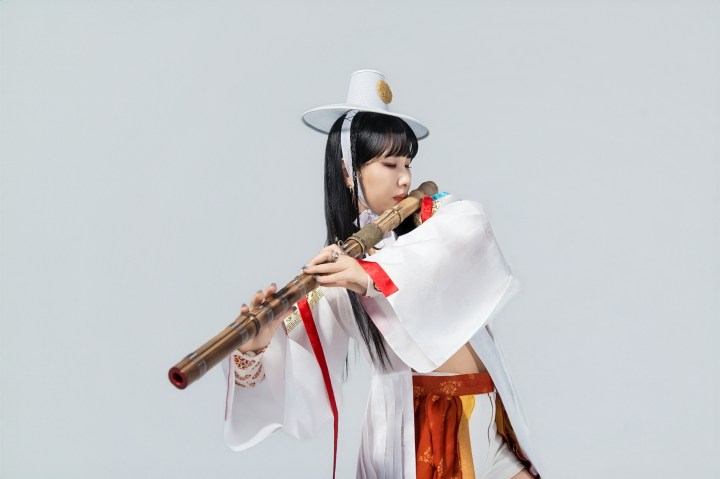
Q8. Your debut single was ‘Arosaegida’, a track that leans more into traditional ballad sounds. What made you choose this style of song for a debut track, as opposed to more fast-tempo pop sounds?
For our debut, rather than immediately presenting fast-paced and powerful music, we wanted to first share the emotions and delicate expressions rooted in Korean traditional music that each GRANADA member brings to the group. We felt that beginning our journey with a gugak ballad would best represent that, which is why we chose “Arosaegida” as our debut single.
“Arosaegida” is a Korean native word meaning “to keep something deeply in one’s heart.” As the title suggests, the emotion we wanted to convey through this song was something that would remain deeply in the listener’s heart. Gugak is known not only for its sense of han and longing, but also for its delicate emotional expression—the subtle nuances that emerge when a note is sustained or its pitch is shaped with great sensitivity. We wanted to capture these unique qualities of gugak in the song.
With a fast-tempo song, the rhythm and energy may naturally take center stage. With “Arosaegida,” however, we felt we could give more space to the emotions in the vocals and the distinctive tones of the daegeum, haegeum, and gayageum. By allowing the delicate sounds of each instrument to blend with the emotion of the vocals, we aimed to create a sound that naturally draws listeners into the atmosphere and emotions of the song.
For us, “Arosaegida” is more than simply our debut single. It is the first song that shows what kind of music GRANADA wants to create. We wanted to introduce the beautiful melodies and unique tones of gugak, along with the emotions contained within them, in a way that could naturally exist within contemporary music. We felt that “Arosaegida” was the song that could best represent the beginning of that journey.
Q9. GRANADA broke boundaries by being the first traditional instrumental music band to perform on K-Pop music shows in May of 2025. What was this experience like, and what were the challenges with bringing this style of performance to a K-Pop music show stage?
Being the first band made up entirely of traditional Korean instruments to appear on a K-Pop music program, and standing on the same stage as K-Pop artists, felt like a dream come true for us. It was also a moment when we felt an incredible sense of pride in what we do.
Another special experience was filming challenges with other K-Pop artists. We would listen to the music on the spot, pick out the musical lines, and play them on our traditional Korean instruments while filming together. It felt like another natural way for our music and K-Pop to come together.
There were also some challenges. When performing live, we can connect directly with the audience and immediately share our emotions and energy with them. On a television program, however, everything has to be communicated through the camera. That meant we had to be much more precise with every facial expression, movement, and aspect of our playing. We spent a lot of time thinking about how to convey the energy we feel on stage within the frame of a camera.
Most importantly, this experience was meaningful because we were able to show that traditional Korean music can also have a place on a much wider variety of stages. At a time when fewer students are choosing to major in traditional Korean music, I hope more gugak musicians will be able to move beyond the boundaries of traditional performance and connect with K-Pop and other genres of music on new stages. We hope our appearance can serve as a small beginning that shows what is possible.
Q10. One of your most recent releases was your single, ‘무봉‘. Could you tell us some more about the lyrics and style of this track?
“Moobong” is a song that reflects the way we see tradition and the direction we want to move toward in the future.
“Moobong” means “dancing phoenix.” Just as a phoenix rises and flies again after overcoming hardship, the song carries the idea that traditional music does not have to remain rooted only in tradition. By meeting new forms of music, it can take flight again and move toward the future.
Musically, the song is based on elements of Korean traditional music, including jajinmori rhythm, sanjo, a traditional Korean instrumental genre, and ganggangsullae. We combined these elements with contemporary pop and hip-hop beats. We wanted to preserve the familiarity of traditional rhythms and melodies while creating a new sound that could feel as natural and accessible as contemporary music.
The lyrics carry a message about moving forward rather than remaining defined by difficulties or failure. In particular, we repeat the line “I can fly again” to express the determination to rise again and keep moving forward, no matter what circumstances we face.
For us, “Moobong” is more than simply a song that combines traditional and contemporary music. Through this song, we wanted to show, through music, how tradition can continue to evolve and take on new forms as it moves toward the future.
Q11. Many of GRANADA’s songs blend different soundscapes and styles together. If you could choose another genre to mix into future songs, which would you choose and why?
Looking ahead, I would like to explore how Latin music and jazz can be brought together with gugak.
I think Latin music has a strong sense of rhythm, making use of elements such as syncopation and polyrhythms, along with a vibrant and passionate energy. I’m really excited by the idea of bringing the rhythms of Latin music together with the traditional rhythmic patterns of gugak and seeing what kind of new music can emerge when melodies and instruments are built on top of rhythms from two very different musical cultures.
I also find the improvisational nature of jazz especially appealing. In gugak, the interaction between performers and their sense of breath and timing in the moment are also very important. So I’m excited to explore what kind of musical character could emerge when the spontaneity of jazz meets the freedom of expression found in gugak.
Rather than simply blending different genres together, I want to preserve what makes each genre unique while exploring how they can come together naturally to create a sound that is distinctly GRANADA’s own GUK-POP.
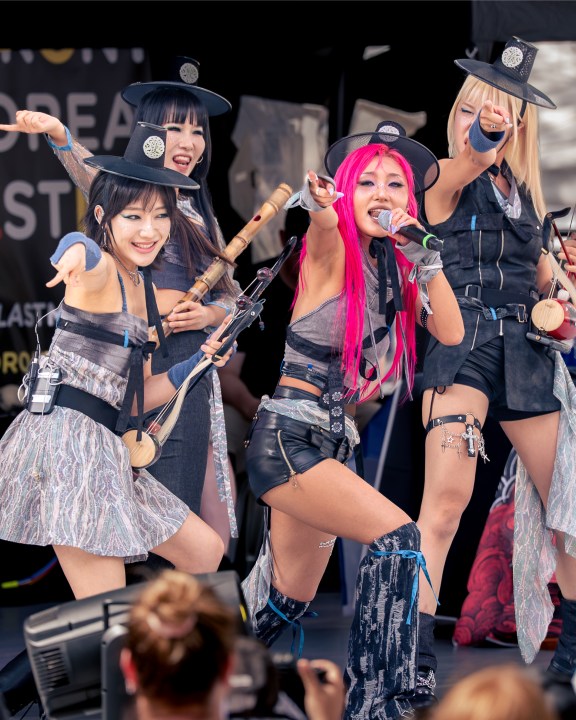
Q12. Which artists, both contemporary and traditional, inspire the members and why?
Jenny: Recently, I have been especially inspired by Hwasa of MAMAMOO and Jennie of BLACKPINK. What I find particularly inspiring about both of them is that they have such distinct identities, while also expressing their inner strength and personal messages through their music and performances.
Watching them has made me realize that, as an artist, building inner strength is just as important as developing your outward image.
In a music industry where countless artists compete and trends change so quickly, I don’t think it is easy to maintain your own identity while constantly questioning yourself and continuing to evolve. I also experience moments of stress and exhaustion along the way, but I believe there is no experience that is truly meaningless. So I try to make the most of every moment and experience I have right now.
It was the same when I was studying traditional music. I constantly questioned whether the sound I was making was truly right, repeating the same passages thousands of times and spending years refining them until they eventually became my own voice.
I feel that I am still going through that same process today. I see this as a time when I am building greater inner strength and making my own artistic identity clearer and more solid, as I continue to find my own path.
Dayeong: Rather than being inspired by one particular artist, I tend to be drawn to artists who have a strong sense of identity and are willing to break away from established boundaries.
I don’t believe that playing a traditional instrument means you have to present yourself in a traditionally conventional way. In fact, I am often inspired by artists who build their own worlds based on tradition while expressing themselves through new music, performance, fashion, video, and other forms of art.
I also want to become a performer who makes people see the haegeum and think, “I never knew you could do something like that with a haegeum,” rather than simply seeing it as a traditional instrument.
Subin: Rather than being inspired by a particular artist’s musical style or genre, I tend to be drawn to artists who have the ability to move people emotionally through music.
I believe that even when performing the same piece, the emotions an audience experiences can be completely different depending on the performer’s mindset and the way they express the music. That is why I am especially moved by musicians who create an emotional resonance that stays with the listener, rather than simply showcasing impressive technique or perfect playing.
As a gayageum player, I want to become someone who cares less about how well I played and more about what people feel and remember after listening to my music. If, even after a performance is over, a piece of music suddenly comes back to someone’s mind, or they hear it again and reconnect with their own emotions, I think that alone can make it a meaningful performance. That is the kind of lasting resonance I hope to create.
Hyogyeong: I’m actually not the type of person who has one particular artist as a role model or main source of inspiration. Whether they are famous artists or artists who are not yet widely known, I like to experience a wide range of music and performances across different genres and discover something inspiring in each of them.
Sometimes I am drawn to the subtle expressiveness of a performer. Other times, an unexpected arrangement or sound on stage catches my attention. I also find inspiration not only in musical elements, but in the way an artist expresses themselves—the way they use their instrument or the energy they bring to the stage.
Especially since I began playing the haegeum with GRANADA, I think I have moved beyond simply asking, “How can I play the haegeum well in a traditional way?” and started asking, “How far can I express myself with this instrument?”
So even when I listen to music from completely different genres, I naturally find myself imagining, “What would this feeling sound like on the haegeum?” or “What would happen if I brought this kind of rhythm or atmosphere into the haegeum?” Rather than staying within the familiar image of the haegeum, I am constantly exploring what role it can play within new genres and sounds.
Jaehee: Rather than being inspired by one particular artist, I tend to find inspiration from many different artists and their music and creative work.
In contemporary music, I learn a lot from artists such as Charlie Puth, Lee Chan-hyuk of AKMU, and Harim, who each have a very distinct identity and create their music, performances, and stages as part of a complete artistic vision. I find it particularly inspiring that they do more than simply showcase what they have. They reinterpret it in their own way and communicate their own stories and unique artistic colors to the public.
In traditional music, I have great respect for and draw inspiration from the many teachers and musicians who have dedicated their lives to preserving and carrying Korean traditional music forward. Because they have protected and passed down this tradition over many years, artists like us are able to build on that foundation, experiment with new ideas, and continue developing the music in new directions.
I think the artists who inspire me all have one thing in common: they have a clear sense of their own identity and continue to create something new in their own way. I draw a great deal of inspiration from that, and I also want to reinterpret gugak through GRANADA’s own music and performances, adding our own stories and colors and sharing them with more people.
Thank you again to the members of GRANADA for this in depth interview – stay tuned for our final part for more individual member insights!
Make sure to follow GRANADA at the links below:
Instagram: https://www.instagram.com/granada_k_official/?hl=en
Spotify: https://open.spotify.com/artist/62mtZhrazHiq0DAldpN8WT
Apple Music: https://music.apple.com/za/artist/granada/1620480698


Leave a Reply