
Hello and welcome back to HallyuTones — always focused on sound, stage, and substance.
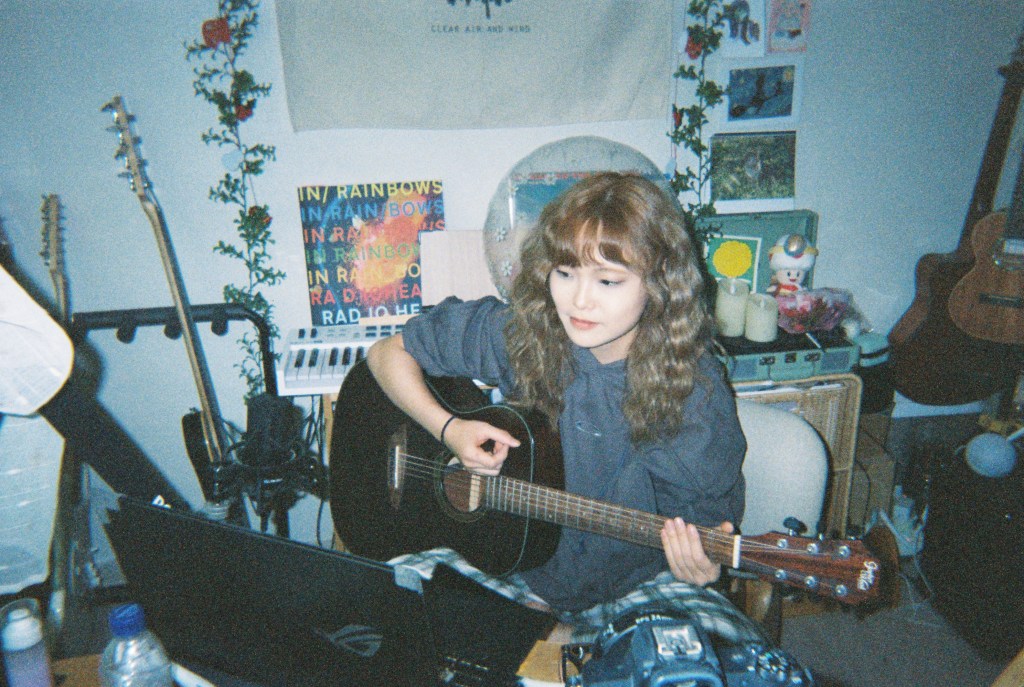
We often speak here, at HallyuTones, about the power of the internet in connecting artists and fans. Our next guest is someone who took traditional marketing practices, like busking, to the internet. Yeju is an artist who shows the versatility of the people we listen to. From dance covers, to classical violin, to guitar, to her voice, the instruments Yeju uses to pursue her craft are endless.
At the age of only 18, the New York born singer-songwriter landed the position as the host of a radio station in the city that connected American listeners to Korean music and culture daily. In this way, artists like Ashley Choi (of Dive Studios and girl group Ladies Code) were able to share their stories of growing up in the Korean diaspora. Also, she was able to share more of what makes Korean entertainment so alluring to the global audience.
Yeju went from having her own show on New York Radio Korea, to guest appearances on stations like Arirang performing her own music. As many fans who watch her streams on Tiktok and Twitch will have come to know, the journey to pursuing music has not always been easy for Yeju. The competitive nature of professional classical music, as well as some of her own expectations of herself have led to her choosing a more authentic, wholesome approach to what, and how, she creates and even consumes music.
Out of this journey came the first public release of her music on streaming platforms with ‘Marionette’. Yeju’s lyricism is that of someone who holds the weight of what they say in every note and penstroke. Other original songs that fans have come to love include ‘Mayhem’, and ‘Doesn’t It All Sound Wonderful’, the latter which a fan recently drew attention for after revealing that it was their wedding song. This moment painted exactly what it means to be an artist; to become part of people’s lives by having the courage to express human emotions through different mediums.
The latest release is a Pre-release track from her upcoming debut album titled ‘When the tide met the moon’. Slated to have ten songs on it, the album has already captured the imagination of listeners who wonder what kind of sound it will have. Her vocal covers range from songs by Fleetwood Mac, to 2NE1, to Aurora, Daniel Caesar and hundreds more. With this in mind, the anticipation keeps building for what the first full project in the Yejuniverse has in store.
Here to introduce herself in her own words, Yeju:
Interview
- Hello and welcome to HallyuTones. Please introduce yourself to the readers.
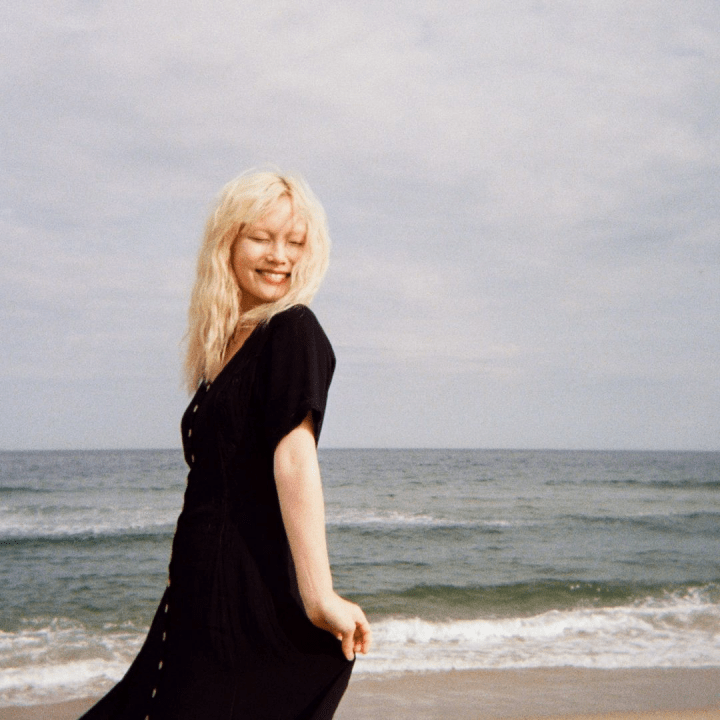
Hello, everyone! My name is Yeju and I’m a Korean-American singer-songwriter based in Seoul, though I’m originally from New York City. I make music that would best fit under the umbrella of indie/alt folk pop for now (lots of words, I know). I’ve also been streaming live music on Twitch for the past five years.
- How would you describe yourself as a music listener?
I am a very emotional listener who goes based on what I feel from the melody/instrumental as opposed to what I’m being told. Which is essentially a fancy, roundabout way to say that I hardly ever pay attention to lyrics when I first hear a song that includes singing. I’m assuming this may have to do with having roots in classical music. Growing up as a violinist meant constantly doing my best to convey emotions without words in my performances. This has made me very attentive to how melodies can evoke strong feelings for listeners. Funnily enough, I actually love writing and analyzing lyrics— it just always comes second.
- What was your first experience that made music feel like something you want to pursue full time?
When I was 7 years old, I picked up a tiny violin my older sister used to play and tried my best to produce a sound that wasn’t absolutely grating to my ears. I must have done decently because I soon found myself in violin lessons. It was either that or my incessant pleas to my parents for lessons. I think it must have been from then that I decided I wanted to become a concert violinist. The desire to become a singer-songwriter came 10 years later, when I was a junior in high school. I had written my first song ever on a little ukulele for a dear friend and something just clicked. I never realized I could craft a song from start to finish with so little at hand. My narrow view of the world of music rapidly shifted and all I could see was endless possibilities.
- You recently showed fans on your social media snippets from your time as a K-pop cover dancer. How did that come to be? Do you consider this time part of your artistic career?
From quite a young age, I enjoyed watching K-pop choreography videos and trying to copy them with my sister, Ketzia. She’s 2 years older than me and, during her freshman year of high school, she and some friends decided to make a K-pop dance team. Eventually, I was invited to join and it just became a little thing for us to do together.
We all got more serious about the dance team in 2018, when a lot more people started viewing our covers on YouTube. I think it’s been so long since I did it consistently that I didn’t think about how it may have affected my artistic career. But upon reflection, I believe I gained very valuable performance experience. One of the great things about dancing is that you have to engage your acting skills to elevate the choreography and fully engage your audience. As a very shy person at the time, I found those moments performing in front of hundreds of strangers to be exhilarating and hilariously out of character. Being on stage as a singer-songwriter still feels new to me, but I hope I can get back to that same level of confidence I had during my K-pop dance cover days.
- People often ask about your background and where you’re from. Can you tell us about your experience as a Korean woman living in the diaspora?
I love being able to experience a blend of cultures and have a broader perspective of the world. I know it’s common for Korean-American people to feel out of place in either Korea or America, but I think I’ve always been used to feeling like an outsider looking in. There’s a sense of freedom that comes along with not being expected to exist in just one identity.
I’m reminded of Life Of Pi by Yann Martel, when Pi explains his reason for practicing multiple religions. He takes the pieces that resonate with him the most and lets himself be guided by this melting pot of faith and I adore this concept. I have fondness for different aspects of both American and Korean culture and appreciate the rich outlook it gives me.

At the same time, I want to be honest about the fact that this experience isn’t always empowering. Many people in the diaspora struggle to feel accepted, and that became particularly clear for me during the early stages of the pandemic. Leading up to my departure from America in 2021, I faced soaring racism and rejection from a city that boasts being a diverse hub of the world. It was no longer a choice to be an “outsider looking in”. I was being pushed into a box of otherness, whether I liked it or not. There are still many good people who will stand up for others and I’d like to keep my faith in the goodness of humanity. And I’ll do whatever I personally can to represent my cultural blend honestly, with all the beauty and challenges it comes with.
- Do you think your responses to the previous question have influenced your artistic direction at all?
Absolutely. I’ve become more open-minded, growing up under these circumstances and learning about what it truly means to accept others and oneself, though the latter is something I’m still working on. These values are strongly reflected in my music. I also hope to one day inspire and encourage others like myself.
- If you could pick a song to represent each part of your life from childhood, adolescence and now young adulthood, which songs would you choose?
“Weird Fishes/Arpeggi” by Radiohead is one of the most memorable songs from my childhood. This interprets your question in quite a literal way, but I think it’s gone on to carry far deeper meaning for me as I’ve gotten older. I remember long drives, staring out the window, silently listening to this song I didn’t even understand yet. I would elaborate further, but maybe that’s the kind of analysis to make in a therapy session, haha. I will never ever tire of this masterpiece.
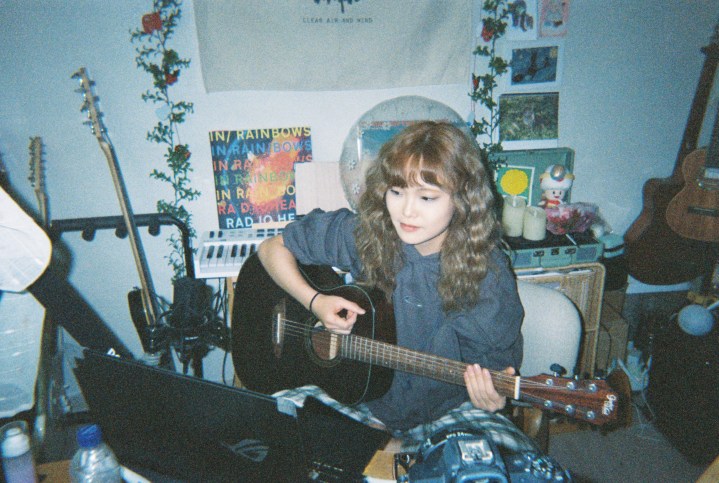
As for my adolescence, I think “Why Am I Like This?” by Orla Gartland would accurately represent the inner turmoil I experienced throughout much of that era. I’m relieved to say I’m a considerably positive and hopeful person now, but I felt the least like myself in adolescence. It was a daily routine of asking myself why I was the way that I was (brings that one scene in The Office to mind, if you know it) while imploring my limbs to take me through the seemingly endless darkness. I was just so incredibly depressed. Artists like Orla Gartland helped me feel not so despondent through music.
“Infections Of A Different Kind” by AURORA is the song I’ve chosen to represent my young adulthood. This has been one of my favorite songs since I first heard it in high school and I always return to it when times are tough. Around its release in 2018, AURORA said that it was the most important song she had ever written and I understand why. It encompasses both the pain and hope that the world can cause a sensitive heart like my own or those of my listeners. And I truly feel like I’m ascending into a greater understanding of myself
- One of the reasons you have such a varied audience is because you share stories about your diverse musical background. What are some lessons you’ve learnt while developing as an artist that you think are worth sharing?
I love throwing rules out the window when it comes to music. Classical music training has undoubtedly helped me become the musician I am today, but I found it to be stifling and disheartening for most of my adolescence. These past 5 years living on my own have served as a chance to unlearn all the rules that held me back from running straight toward my dreams. I was so hard on myself as a child, never feeling good enough to get the praise I so desperately wanted from the adults around me. I was only able to make it this far by challenging that need for validation. I still struggle with it at times, but I feel more motivated to do something when I catch myself being even a little bit frightened by it.
- Speaking of your background, as someone who is learned in music theory, what are some key concepts that you wish the general public knew?
Oh boy, I was actually one of the worst students in my music theory class in middle school. I went to a pretty interesting school—it was literally called Special Music School—and most of my 16 classmates had been trained in music theory since kindergarten. I was WELL behind my entire grade and classes were not catered to beginners at all. I kept completing assignments incorrectly, and yet my music theory teacher later remembered me as a good composer when we reunited a couple of years later. I reckon it’s a good thing he doesn’t recall how poorly I followed assignment instructions.
I think many budding musicians feel insecure about their lack of music theory knowledge so my “key concept” to share is as follows: you don’t need music theory to be a fantastic artist. Would it help? Yes, I think it could but plenty of legendary musicians have gone their whole careers without knowing the circle of fifths or being able to complete a musical transcription assignment. If you just take a bit of time to learn about chord structures, that should help you enough. It’s one of the simplest things to get a hang of, especially since you have the visual of piano keys to help you!
- What are some of the most notable things you’ve learned while moulding yourself and your artistic catalogue?
I’ve learned that I am constantly evolving my sound. No matter how much I’m set on a certain style or instrumentation at one point, it nearly always changes in due time. I think this is a natural part of being an artist and I’m trying to just accept it and not reject my past forms as “not me”. It’s all me! I think showing progress is good, though I have to keep reminding myself of it. I’m very curious as to what my music will sound like ten years from now.
- Who would you say are some of your greatest musical influences?
I always mention the following artists: AURORA, Orla Gartland, Radiohead, Bon Iver, and Sufjan Stevens. I don’t particularly write with the intention of sounding like any of them, but if you ever hear some echoes of these artists in my music, it’s because I positively revere them. It’s hard to say how this list came about but I do feel quite at home in this soundscape.
- With the rise of interest in Korean pop culture and music, many people often assume that other artists they come across are also involved in the idol industry. What is a misconception or question that you always see in your own orbit that you wish people understood?
Honestly, this has never upset me too much because it can take a brief moment to clarify what I do. Perhaps I’ve been fortunate to not meet too many people who are trying to put me in a box. I think it’s also a blessing to be lesser known at this point, since people don’t have much to base their assumptions off of.
Though this isn’t about my own experience, I recently had a conversation with an accomplished US-based producer who shared that the former K-pop artist he works closely with is repeatedly labeled as a “K-pop artist” when their music is purely pop now. I think it’s a very real struggle for former idols who are transitioning into Western pop music. It’s unfortunate that they can’t peel away from this category that they don’t feel resonates with them anymore. As I said earlier, artists are constantly evolving and should be allowed to do so. I hope listeners can give artists a chance to branch out and explore new sounds.
- What is something that you think your younger self did to prepare ‘Adult Yeju’ for the world of a public facing career?
Hm, I don’t think my younger self ever consciously prepped for this kind of future. Especially because I didn’t think many people would be that interested in what I was doing. But in more recent years, I would give credit to my experience on Twitch for making me better at speaking to people for the first time. I also got better at live performances because I practice almost every day in front of a camera for people on the internet.
I do feel like I’m not ready enough for a public-facing career as I regularly have the urge to run from it. I get spooked quite easily when my privacy is threatened, as most people do. And oh, the impostor syndrome— it truly eats me up sometimes. Even answering these interview questions has challenged my self-perception immensely. Still, little by little, I think I’m learning to be more gentle with myself. To summarize everything for those looking to pursue a similar career: therapy is your friend.
- What is your favourite original song that you have released so far and why?
My favorite official release is definitely “When the tide met the moon,”— the pre-release track from my upcoming album. It’s far more aligned with my current music style and voice than previous releases. I wrote it during a really challenging time in my life and I’m grateful something good was able to come out of it. I’ve actually been beating myself up over the past year, wishing I could have done this or that better when recording it, but I stand by my answer. I’ll always be my own biggest critic, after all.
- Are there any moments from working on music with collaborators that have stuck with you?
Working with everyone at Plaid Dog Recording on my album was an incredible experience. I learned so much and gained confidence as a collaborator in a professional setting. There was never the feeling of just being told what to do— I got to be very involved from start to finish. All my doubts I went in with vanished throughout my days in the studio.
- Which artists do you look forward to working with in your career? They can be either a recording artist or part of the production team.
I can’t say I particularly “look forward” to working with my role models because I can only hope for now, haha. But, if given the opportunity to, I would be beyond honored to collaborate with AURORA. I could list all my favorite artists but then my answer would get far too long. She is an artist who I love not only as a musician, but also as a human being. I think it’d be a life-changing experience, writing and performing with someone like her.
- Of the songs on the upcoming album, which are you most excited for people to hear?
My answer to this question changes every day because I’m a very sensitive person. As of this moment, my favorite song is track #8 on my upcoming album. It was one of the most painful yet fun ones to write— two adjectives one shouldn’t really put together but it’s an accurate description. “Painful” because of the trauma I was unpacking and “fun” because it’s so satisfying to see an idea come to life just the way you wanted it to. Musically, I think it’s also the closest to the style I’m most drawn to as an artist. I hope to make many more songs like this in the future.
- What would you like for people meeting you for the first time to find out through this piece?
I’ll address readers directly! Hello, stranger. I’m so grateful you happened upon this article and chose to read through the entire thing. I am just a human being who sometimes knows what she’s doing and, at other times, drowns in anxiety and writes songs about it. I’m on a mission to take all the feelings I stifled throughout my youth and let them breathe through song. Maybe this will resonate with your own inner child who is still suffering. I hope that this interview has piqued your interest enough to put my upcoming music on your radar.
- Finally, what message do you have for the people who have been listening to and supporting you thus far?
Thank you for seeing me in the kindest light and supporting my dreams. I couldn’t have wished for a better community to be surrounded by and I will continue to show you my heart through what I create. I hope my upcoming album becomes as dear to you as it is to me.
Oftentimes when we consume the work of others be it in art form or otherwise, it’s easy to forget the process of becoming that the artist goes through to create. This conversation with Yeju truly highlights how important it is for both fans and cocreators to be mindful of the very real people behind so many of our favourite things.
The debut album is still a few weeks away but we hope that this interview has made people more curious about Yeju and the work that she does. If you live in the New York City area, tickets for the first live performance of work from the album @ The Bitter End on March 2nd are available here.
Instagram: Yejuniverse
YouTube: Yejuniverse
Twitch: Yejuniverse
Tiktok: Yejuniverse
LinkTree: Yeju Round up
 HallyuTones
Leave a comment