
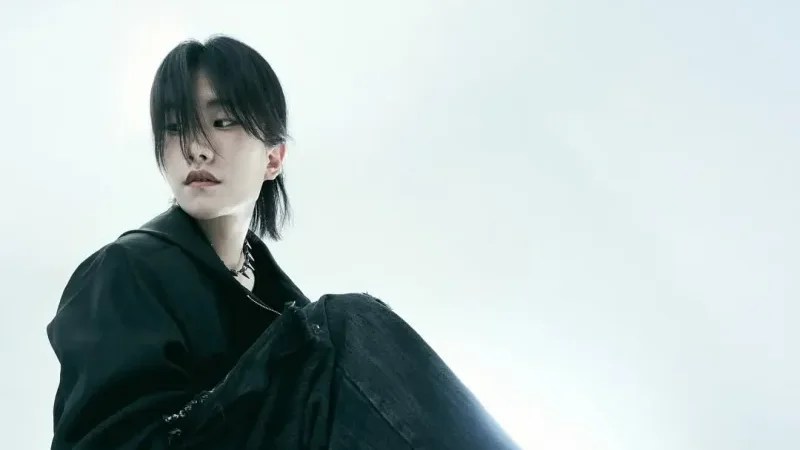
Hello and welcome back to HallyuTones – always focused on sound, stage and substance.
Today we’re introducing rapper, producer and independent artist Lowell Straight, a name that has been expanding the possibilities within Korea’s alternative music scene.
Over the past few years, he has been quietly carving out his own direction in music. Starting as a composer and producer, he later stepped into performing, releasing tracks that move between hip hop, pop and electronic influences. His songs includes collaborations with artists from different scenes, experiments with rhythm and language and a growing relationship with international listeners who connect with the sincerity of his work.
As Lowell prepares his next album, he enters a phase where identity, memory and creative freedom play a central role. In this conversation, he talks about the themes shaping his new project, the process behind his song writing and production, and how photography and everyday observation influence the way he creates.
Below is our full interview with Lowell Straight.
***
Interview
Q1. To start our interview, please introduce yourself to the HallyuTones readers. Who is Lowell Straight, and how would you describe your work today?
Hello. I’m Lowell Straight, an artist making music in Korea. I started by composing and arranging, and for a while I worked as an EDM producer inspired by Japanese subculture styles. At some point I felt that I didn’t want to remain only as a producer and wanted to express myself directly as a performer and artist, so I began singing and rapping. Since then, I’ve been releasing different projects and continuing my activities steadily.
Q2. You are working on a new album. What is guiding this phase, and what has changed in your process compared to your previous releases?
Nostalgia, liberation and escape are the keywords of this album. I realized that for a long time I lived under pressure to be recognized and to keep moving up. Recently, I imagined myself living quietly in a simple neighborhood, enjoying music in a pure way and even disappearing for a while in a place where no one knows me. These feelings became the emotional core of the project.
Another change is that my thoughts about my identity have become clearer. Calling myself a hip hop artist didn’t feel accurate, and I don’t fit the image of a K-pop artist either. This album feels like a process of building my identity in a more honest and natural way.
Q3. When you begin a new song, what usually comes first for you: a melody, a beat, or an emotion you want to express?
I run almost every day and spend time walking or going to cafés alone to clear my head. During those moments, thoughts come naturally, and I bring those feelings to the studio. I start by creating chord progressions and melody lines, and that becomes the sketch of the song.

Q4. Your identity blends hip hop, pop and EDM. How do you find balance between these genres while keeping your own signature?
I realized that I don’t want to be defined by any genre. That state feels the most comfortable to me and is also my way of respecting each style. Since my tastes are wide, I see genres as cultures and lifestyles rather than categories. I feel more like a fan of each style than someone trying to represent them. Moving freely between genres is what feels most natural for my music.
Q5. You have incorporated Brazilian rhythms and phrases into your music, and your audience in the country has grown. Is there any other genre or cultural influence you would like to explore in the future?
I’ve mentioned before that I really like bossa nova. Since then, I’ve spent long periods listening to the genre, studying it and trying to create within it. But understanding bossa nova deeply is difficult and takes time. I grew even more attached to it after connecting with people in Brazil. For now, I want to explore it further and keep listening until I gain enough understanding.
Q6. You have collaborated with many different artists over time. How have these partnerships shaped your sound and your ideas?
I think I’m influenced more by conversations than by the actual studio work. When you get to know someone, you understand why they make music, what they want to express and what goals they have. These conversations give me perspectives I wouldn’t see on my own and motivate me to work harder.
Q7. What has been the biggest creative challenge you have faced or are facing while building this new project?
The biggest challenge has been learning to let go of myself more while creating. I think I’m becoming someone who wants to stay in a state of not being anything specific. Living honestly and comfortably. That mindset naturally connects to the creative challenge of this album.
Q8. Your international audience is growing. Are there themes or messages you want to emphasize more strongly in this album?
I’m not sure yet. I feel the album won’t have a bright tone, and I don’t want to force something cheerful. I think it will reflect my current emotions as they are. I also thought about how everyone is trying their best to live. So let’s see good things, eat good food and laugh whenever possible.
Q9. Outside of music, you also enjoy photography and other artistic hobbies. How do these interests influence your identity as an artist and the way you create?
I started taking photos because I wanted a sense of unity in my work. I’m not professional yet, but I try to capture the atmosphere I like. In the end, what remains in life are records. I want to leave traces of what I experience and portray a realistic emotional tone without exaggeration. I try to bring that feeling into my music as well.

Q10. You compose and produce your own tracks. How does your creative process work when you’re writing lyrics and building a song from scratch?
I usually start by building a basic melody on the keyboard, and I play most of those parts myself. I’m not skilled with guitar yet, so Vincent K helps me a lot. I create basic chords and drum patterns, then develop the vocal melody and lyrics while recording a guide. I’ve lost ideas before by not recording them immediately, so now I capture everything on the spot. After that, I work on detailed arrangement, record the final vocals and finish with mixing and mastering.
Q11. How would you like listeners to see you as an artist, and what is the dream you are pursuing for your career?
I don’t have a specific expectation about how I should be perceived. Many people associate Korean artists with K-pop because of its global influence, but there are many artists outside that frame. I think I’m one of them. Instead of belonging to a category, I want to be seen as someone who creates music in my own way. My dream is to stay healthy and continue making the music I love for a long time. And sometimes I’d like to perform on big stages too.
Q12. To close, please send a message for new listeners or for anyone discovering your work for the first time.
I’m Lowell Straight, an artist who still has a lot to grow, both musically and personally. I want to become a better person. I’m not good at loud expressions of affection, but I always feel grateful inside. Thank you sincerely to everyone who has shown interest in my work.
***
Thank you to Lowell Straight for taking the time to share more about his work and the album he is preparing. We look forward to the project’s release and to following the next steps in his career.
Stay tuned to his official channels for future updates:
Instagram: @lowellstrai6ht/
Youtube: @lowellstrai6ht

![[Interview] Introducing Andrea Najla; an artist shaped by Jakarta’s love – HallyuTones avatar](https://hallyutones.com/wp-content/uploads/2025/05/cibjbacf.jpg?w=40)
 HallyuTones
Leave a comment