
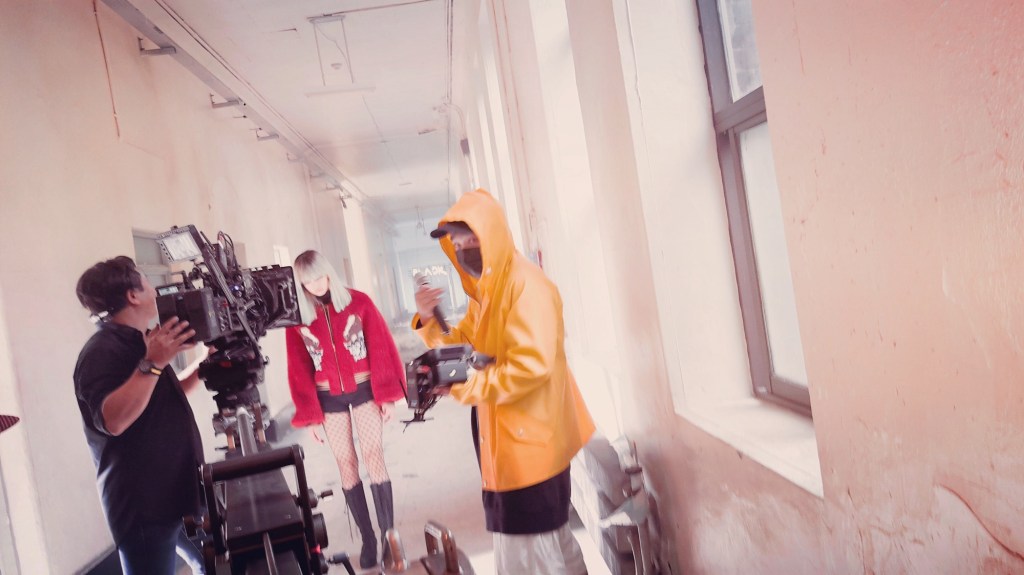
Previously, I explored what goes on in front of the camera in K-pop music videos. Today we will be doing the opposite by going behind the scenes with a director who has a very impressive portfolio!
Han Sa-min is the backbone behind some of K-Pop’s most notorious music videos – working with major names such as: BIGBANG, 2NE1, BLACKPINK etc. Throughout his 14 year-long career he has accumulated a long list of music videos, commercials and even formed a production company under his direction; Dextor Lab.
A music video director translates a song into a visual story and then brings the story to life; from developing the initial concept and storyboards to overseeing cinematography, choreography, set design, and post production editing, the director participates in all aspects of the video’s creation.
Oftentimes fans overlook the work that goes beyond the artist, so I’m pleased to have this chance to interview someone with a lot of experience of being behind the scenes!
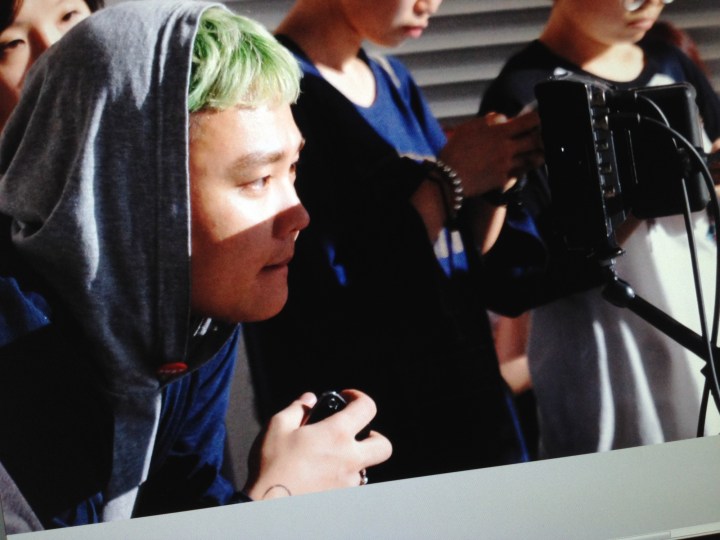
Interview:
Q. What initially drew you to directing, and how did you break into the industry?
Actually, my dream wasn’t to become a director. During college, I happened to receive my first camcorder as a gift. I played around with it, shooting and editing videos, and ended up submitting them to contests held by music stations, winning awards consecutively. That connection led to me working at a music channel after graduation, where I slowly and naturally began directing videos.
Though I didn’t major in directing, opportunities kept arising through my work at the company. I think it just naturally continued because I consistently approached each project with a mindset of learning and putting in the effort.
Q. You studied fashion and graphic design, how does that translate into your directing work?
Yes, I majored in fashion and wanted to create my own brand. Design suited me well because I enjoy seeing things I find visually appealing.
As I became a director working in video production, I realized that the graphic designs and stunning images from the fashion industry I loved and constantly looked at, along with their energy, were no different from directing all the aesthetic aspects—art setting, color palette, screen composition—in my role as a director. Fashion and design aesthetics have always been elements I cherish, and I believe they form the core, essential parts of my inspiration and creative energy.
Q. Can you walk us through your typical pre-production process for a K-Pop music video?
I believe the overall direction of the big concept is most important.
I tend to solidify my thoughts by first concretizing the feelings I get from the song and lyrics. Of course, I carefully listen to the vision of the songwriters or singer and incorporate it into my thinking while visualizing it concretely.
First, I think about the vision I have for the singer’s image in this song. Then, I write out the full story—even if it doesn’t have a strict beginning, middle, and end—and organize it.
During this process, I list specific scenes that come to mind. Finally, I listen to the song repeatedly, recalling those scenes to refine everything. At first, I listen sparingly to avoid becoming too familiar with the song.
Once I’ve organized the scenes I need, I gather the elements required to bring them to life. Of course, ideas for locations or sets do come to me to some extent while I’m thinking about the scenes. Additionally, I organize everything I can think of regarding the characters’ costumes, hair, movements, and emotions.
After that, I communicate directly with the singer and work towards completing the shoot. Honestly, the process seems to change from time to time. But visualizing the feelings I get from the song and the singer remains the same.
Q. How much control does a K-Pop MV director have over their videos?
K-Pop music videos are often complex projects requiring consideration of numerous factors rather than purely personal endeavours, and I believe the feeling conveyed by the song and the artist’s desired vision are paramount.
However, since it ultimately falls to me to imagine and create every scene, in my case, I believe I have worked throughout the entire process – the overall concept, costume design, filming, editing, and post-production – sufficiently in the direction I felt best suited my vision.
Naturally, I always listen carefully to the singer, songwriter, and others involved regarding their desired content before attempting to realise my own directorial vision.
Ultimately, I feel I’ve worked with my creative rights fully respected throughout the entire process. Even if it’s not my personal project, if I can’t fully immerse myself in the work, I doubt I could complete a good video.
Q. How has K-pop trends and visual aesthetics changed since you started?
K-Pop is a field extremely sensitive to changing trends.
It has continuously evolved over time, and I believe there have been several major shifts. The biggest change I see is that the conceptual work behind each music video has become increasingly strong.
Compared to early Korean music videos, I believe current productions generally establish a much stronger concept down to the smallest details. Personally, I think the end results have become more interesting and I view this positively.
Additionally, I believe the trend in K-Pop music videos has shifted towards using more CG, driven by the influence of technological advancements like AI.
Q. As Western music videos are fading out of prominence, what do you think has allowed K-pop music videos to stay relevant?
In my opinion, rather than the influence of Western music videos weakening, K-Pop has grown sufficiently into its own distinct genre these days.
First, I believe K-Pop’s musical success is the most significant globally. Consequently, K-Pop music videos and content have become a genre unto themselves.
Of course, I think the quality of the videos has also continuously evolved through experimentation with content and diversity.
Above all, I believe K-Pop has grown into a distinct culture precisely because fans worldwide now consume its music, dance, fashion, and music videos—all reflecting incredibly fast-moving trends.
Q. How do you work with the cinematographers to achieve your vision?
First of all, I try to organise my vague visuals and images clearly enough.
Following that, through multiple meetings, I communicate what I desire to the director of photography.
I repeatedly contemplate right up until the moment I arrive on set, crafting a clear picture of what I want.
However, once on location, I tend to shoot while embracing changes based on the artist and the atmosphere on set.
Q. Can you share a pivotal moment or project that shaped your directorial style?
I think my directing style is not fixed to one thing.
Of course, I think I have a clear style, but I can’t think of a specific moment or project that defines it. When I think about it, I feel like my unchanging emotional essence has already been decided. While the essence doesn’t change, I think I’m learning and growing on my own through all the projects I do, creating my current style.
Q. What’s your favourite part about directing?
I love listening to music for the first time without any prior information, letting my imagination run free for a day or two.
Of course, I also enjoy the process of bringing my vision to life afterward, but for me, those moments are often filled with hardship, pain, and anxiety.
But then, when the shoot on location goes exactly as I imagined or even turns out more amazing than I hoped, that’s when anxiety transforms into pure joy—and I love that moment.
Q. Is it difficult making fresh and innovative ideas in an industry that is constantly creating?
Of course, I think it’s difficult to continuously generate fresh and innovative ideas. But rather than striving to find something ‘completely new,’ I believe focusing on the feelings that matter to me now, the differences in my thoughts compared to usual, and concentrating on what the artist and the song convey to me ultimately produces the freshest results.
Trends change rapidly, but what matters most is not following trends, but rather closely examining the small differences within the essential elements and your own feelings. I believe this is ultimately the most important thing for creating something new.
Q. Which music video are you proudest of and why?
If I had to pick the one I’m most proud of, it would be my major debut music video, BIGBANG ‘Love Song’.
We set up the shoot in the middle of a windy outdoor field. To achieve that flying camera effect and capture it precisely, we used four massive cranes for a ‘4-point wire camera’ setup. It required memorizing every camera position, just like MCC.
For the first two nights and three days, the camera wouldn’t move as I envisioned, and memorizing over 100 points took an incredibly long time and was extremely difficult. I was on the verge of giving up, but ultimately, the actual shoot only took two takes and wrapped up successfully in about 15 minutes.
Looking back now, those exhausting days spent over two nights and three days perfecting the camera movements are personally the most memorable for me.
Q. What’s your view on the rise of AI – a threat or a tool?
Personally, I think it’s a great tool that adapts to the changing times and technological advancements. Ultimately, technological change provides new tools even for visual directors like us, but how we think and implement them is up to each individual. That’s why I consider it a valuable option and tool.
Q. Are there any concepts or visual styles you’d like to try in the future?
Among my ideas that I always repeat, what I think is especially important is that I stick to even the smallest difference in thinking until the end, and as those small ideas are implemented, I’m happy when I can create my own video style or feel that I want.
In the future, I plan to challenge myself in various genres, but especially in music video work that involves working with music.
I want to endlessly embody and convey to the public what comes to me through feeling rather than consciousness.
I think I can continue doing this work because of the joy it gives me through the process of visualizing the feelings I get from music.
Q. Any advice for aspiring directors?
While it’s true that the K-pop trend is changing rapidly and perhaps becoming more uniform, that’s also a characteristic of the current market.
The more that happens, the more I think it’s most important for the director to focus on their own feelings, thoughts, and style.
The stronger the desire to clearly convey the director’s vision amidst various projects and changing environments, the more I think it’s most important to focus on yourself.
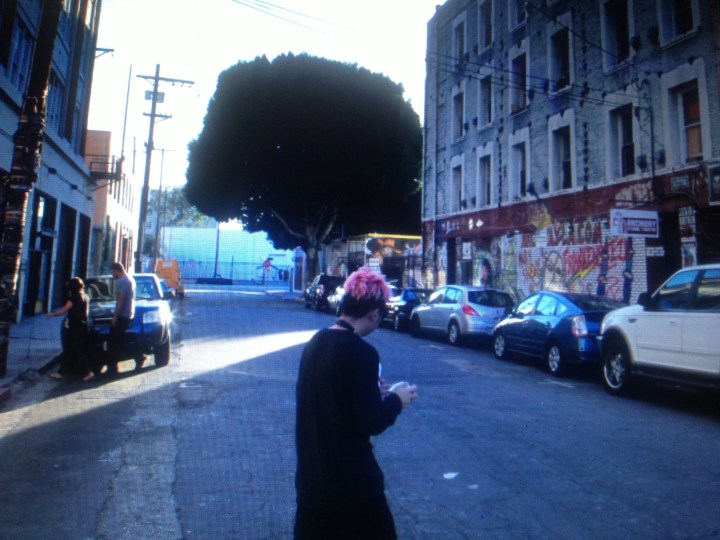
As someone with an interest in videography, this has been a very interesting interview for me and I hope it was an equally intriguing read for you guys! Thanks again to Han Sa-min for answering our questions – I’m looking forward to whatever you work on in 2026!
To keep up to date with Han Sa-min’s work, follow him at the link below:
Instagram: https://www.instagram.com/sa_min_han/?hl=en
 HallyuTones
Leave a comment