
Hello and welcome back to HallyuTones – always focused on sound, stage and substance.
Korean music is more than just K-Pop. Traditional Korean music has existed for countless generations, shaped by Korean culture, language, and tradition.
Our latest interview guests are a band that exists on the cusp of both the modern and the traditional, blending both elements seamlessly to create something new and uniquely their own.
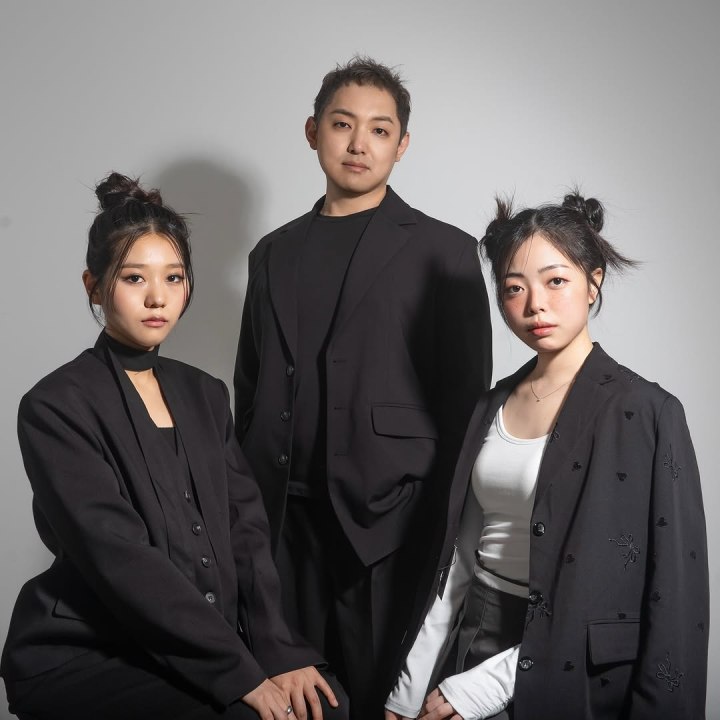
Today we are so excited to introduce you to SYOT (See Your Own Tradition) – a band that are shaping the future through their connections to tradition.

Read on to find out more about the members and their music!
Introduction:
Q1. Could you please introduce yourselves to our readers?
G.QOO: Hello, I’m G.QOO, the producer of SYOT. I play guitar, bass, synths and various other instruments, and I oversee the band’s overall sound design and musical direction.
Hanbeen: I’m Hanbeen, the pianist and vocalist of SYOT.
Yoolim: Hi, I’m Yoolim, and I play the gayageum.
Q2. What inspired the name ‘SYOT – See Your Own Tradition’?
“SYOT” represents the act of revisiting and re-examining one’s cultural identity.
For us, Korean traditional music is a root—but a root that can be reinterpreted and reshaped in countless ways. The name reflects the idea that tradition is not only something to preserve, but something that can be newly seen and personally reimagined.

Q3. How did SYOT first come together?
G.QOO and pianist Hanbeen had been collaborating in the pop music scene for some time. Later, while searching for a gayageum player who could explore new ground between traditional and contemporary music, we held several auditions and eventually invited Yoolim to join.
All three of us were interested in experimentation and broader musical exchange. With this line-up, it felt possible to build a sound unbound by any single style.
Q4. How would you define SYOT’s musical identity?
We think “neo-traditional” captures us most accurately. Our music blends elements of electronic music, jazz and K-pop with a modern interpretation of the gayageum, creating a sound where traditional sentiment and contemporary textures coexist.
Rather than belonging to a single genre, SYOT feels closer to a musical universe.

Q5. Could you introduce your new double single, ‘Hassla / Velvet’?
“Hassla” takes its name from the old title of Gangneung, Korea. The track channels the energy of wind, waves and natural landscapes. The gayageum, bass and piano engage in an intense dialogue—each voice distinct, yet woven together seamlessly.
“Velvet” places a groovy rhythmic foundation beneath jazz and ballad sensibilities. Much like velvet fabric drifting in air, the polyrhythms between piano and gayageum intertwine to create a tactile, immersive sound.
Q6. G.QOO, you’ve worked on many major K-pop projects. Could you tell us more about your work?
G.QOO: For over a decade, I’ve worked with a wide range of YG artists—from Taeyang and WINNER to AKMU, TREASURE and BABYMONSTER. I’ve always felt that their musical direction aligns naturally with my own, and I’m grateful to be part of these projects.
Q7. Yoolim, for readers unfamiliar with the gayageum, what makes the instrument special?
Yoolim: The gayageum is a Korean zither with more than 1,500 years of history. Its silk strings—twisted by hand—are plucked with bare fingers, producing a deeply tactile sound. Among zither-type instruments, its left-hand techniques are particularly expressive, with wide bends and sigimsae (ornamental gestures) that bring the melody to life.
My mother learned gayageum as a hobby, so the instrument was always at home. Playing with it naturally sparked my interest.
Q8. Hanbeen, what drew you to your respective instruments?
Hanbeen: The piano’s 88-key range allows it to completely shift character depending on how it’s played—that’s its greatest charm.
As a vocalist, my outgoing personality also comes through, adding energy and colour to our sound.
Q9. Which artists inspire you?
G.QOO: I’m very inspired by Da:lum, a Korean duo creating a new sonic world using only gayageum and geomungo.
Hanbeen: Vocalist Sunwoojunga moves freely across jazz, R&B, pop and more, and her tone and expressiveness are exceptional. She’s one of the true artists of Korea.
Yoolim: I’d like to highlight Novasia. Their oriental-electronic sound is what I reach for when I want something dreamy and atmospheric.
Q10. What does music mean to each of you?
G.QOO: Music is a universal language. Wherever you go, if there’s an instrument, you can communicate as if you’ve already known each other for years.
Hanbeen: Music is like a mirror. Even without speaking, my personality shows when I play. Sometimes I discover sides of myself I didn’t know existed—so honestly, performing can feel a little scary!
Yoolim: It’s the one thing I never grow tired of—always new, always exciting.
Q11. Which global artists influence your creative process?
G.QOO: Jacob Collier is endlessly inspiring—his harmonic language, rhythmic approach and multi-instrumental ability always amaze me.
Hanbeen: Listening to Aaron Parks feels like my heart might burst—his music is soft yet intense, delicate yet raw. It excites me every time. I even joke about changing my name from “Hanbeen Park” to “Hanbeen Parks.”
Yoolim: Nils Frahm gives me the deepest comfort. Listening to his music in the dark makes me feel understood, and it motivates me to become someone who can offer that kind of resonance to others.
Q12. SYOT’s visual identity is striking. How do you approach your visual direction?
We treat visuals as an extension of each song’s universe. From choosing locations to shaping the atmosphere, we consider how the song’s emotions can be translated into imagery.
G.QOO directs, films, edits and colour-grades most of our video work. We hope the visual aesthetic enhances the musical experience.

Q13. Do you have any advice for emerging musicians?
G.QOO: Music is a lot like learning a language—you can study alone, but you learn the most by communicating and collaborating.
Hanbeen: Tone research feels like both the beginning and the end of music. Every instrument has its own voice, and once you find the right tone, the music truly begins. The only real secret is patience—endless patience!
Yoolim: I’m still at the beginning myself, but… just do it, and keep reflecting.

Q14. What can we expect from SYOT in the near future?
We’re preparing to release our first full-length album in the first half of 2026. Building on our past releases, we want to pursue bolder ideas and expand our musical range. Throughout next year, we also plan to perform extensively and create more opportunities to meet audiences in person.
From 2025 onward, we’re aiming to take on festival and live projects in the UK and beyond—so please look forward to it.
Q15. Any final message for your listeners?
In the spirit of “See Your Own Tradition,” we hope to continue exploring and defining our own path. We’d be honoured if listeners could join the journey in their own way.
Thank you so much to the members of SYOT for their time! Their vision is the heart of HallyuTones – showcasing the many layers of Korean music and the talented individuals putting their heart and soul into their songs.
This interview also marks two huge milestones for the site. It is both our 30th interview, and also marks the 6 month anniversary of HallyuTones. Thank you to everyone who has supported us so far, and here’s to many more years of interviews and analysis!
To keep up to date with SYOT, please follow them at the platforms below:
Spotify (Link to their most recent album, ‘X’): https://open.spotify.com/album/4c15RPOY28Me4VGV0EmXK9
Apple Music: music.apple.com/za/artist/syot/1815549744
Instagram: https://www.instagram.com/syot.band
YouTube: https://www.youtube.com/@syotofficial
G.QOO Instagram: https://www.instagram.com/g.qoo
Hanbeen Instagram: https://www.instagram.com/onebean_p
Yoolim Instagram: https://www.instagram.com/y00lim__
 HallyuTones
Leave a comment