

Hello and welcome back to HallyuTones – always focused on sound, stage, and substance.
Today we are proud to announce the launch of our latest column, ‘THE WAVE‘, helmed by our new writer Dani! This series focuses on the sociocultural impacts of K-Pop and the Hallyu Wave. Expect in-depth deep dives into many different topics. Many of these pieces will be longer than our typical releases, so sit back and prepare to dive in to our most detailed articles yet!
K-Pop emerged in South Korea in the 1990s and, in just a few decades, became a global cultural phenomenon. What began as a music industry aimed at the Asian public expanded worldwide with groups that combine singing, dancing, fashion, and a very close relationship with fans. More than well-produced songs and choreographies, K-Pop created a culture of engagement. Fans actively participate on social media, organize campaigns, promote their artists, and consume products that reinforce this emotional connection.
This universe relies on a market structure that has learned to turn the emotional bond between artists and the public into part of the experience. Physical albums, photobooks, lightsticks, and photocards are released in several versions, often in limited editions, and have become essential elements of fan culture. Owning one of these items is a greater experience than just collecting, it is also about being part of a community, expressing support, and feeling close to the idols.
Consumption within K-pop takes on another meaning. It ceases to be just a commercial exchange and comes to represent belonging, recognition, emotion, and more than that: affection. Products become symbols of connection and identity, functioning as bridges between people from different countries and cultures. In this way, K-Pop reveals how contemporary pop culture has transformed the act of buying into a way to connect and exist within a global community.

The economic engine behind K-pop
K-Pop’s growth is also explained by the professional structure that supports the sector. The four largest companies in South Korea — HYBE, SM, JYP and YG — form the main structure of the industry. They have a role beyond what we know as record labels, they are also talent agencies, concert producers, and brand managers, creating a system in which the artist is both a product and a global brand.
HYBE, responsible for names such as BTS and SEVENTEEN, is now a conglomerate that unites music, technology, and digital platforms, with operations in several countries. SM Entertainment, a pioneer in exporting Korean pop since the 1990s, was one of the first to understand the international potential of this model. YG Entertainment boosted the fusion between hip hop and urban aesthetics, while JYP Entertainment consolidated its strength with groups targeting both the Asian and Western markets.
The size and impact of these companies have caught the attention of international financial institutions. Morgan Stanley, one of the world’s largest investment banks, headquartered in New York, highlighted in a recent report that K-Pop has become one of the most profitable entertainment sectors in Asia. The document points out that between 2019 and 2023, the four Korean companies together reached about 3 billion dollars in revenue, with profits exceeding 450 million dollars. These numbers show that K-pop has gone beyond the artistic field and established itself as a global economic model.

In South Korea, the effects are visible even in foreign trade statistics. According to the Korea Customs Service, the agency responsible for monitoring the country’s exports, international sales of physical K-pop albums reached 291.8 million dollars in 2024. Most of this value comes from special editions, collections, and limited items, merchandise that carries a symbolic and emotional value for fans.
Data from the International Federation of the Phonographic Industry (IFPI) illustrate the global dimension of K-pop consumption. In 2024, 17 of the 20 best-selling albums in the world were by South Korean artists, a number that shows the strength of physical sales even in a market dominated by streaming. K-Pop is sustained by a mechanism that combines economy and affection. Companies understand that consumption is not only the result of success but part of it. Each item becomes a piece of a shared narrative between artist and audience, a link that keeps the market active and the culture expanding.

Consumption as a form of belonging
K-Pop products represent more than collectible items and take on a central role in the construction of identity and belonging among fans. Within fandoms, each item carries a social and emotional role. The photocard, for example, is seen by many fans as a personal bond with the idol. Even when mass-produced, it is treated as something unique. Having the photocard of one’s favourite member goes beyond collecting and expresses a sense of closeness, recognition within the community, and emotional attachment.
This logic also extends to limited editions. The physical album, which in other contexts has lost relevance, remains essential in K-Pop precisely because it carries emotional and collective value. Companies release multiple versions of the same album, with different covers and content, and each becomes a marker of engagement. Fans who acquire all versions reinforce their dedication and connect with other collectors who share the same interest, whether in the same group or in the act of collecting itself. It is an economy of emotion, in which the object serves as proof of love, participation, and loyalty.
The act of consuming within K-pop works as a symbolic form of communication among fans. Purchase choices reveal belonging, affection, and shared identity. Through these gestures, consumption ceases to be only material and transforms into a collective language that unites people around shared experiences and emotions.

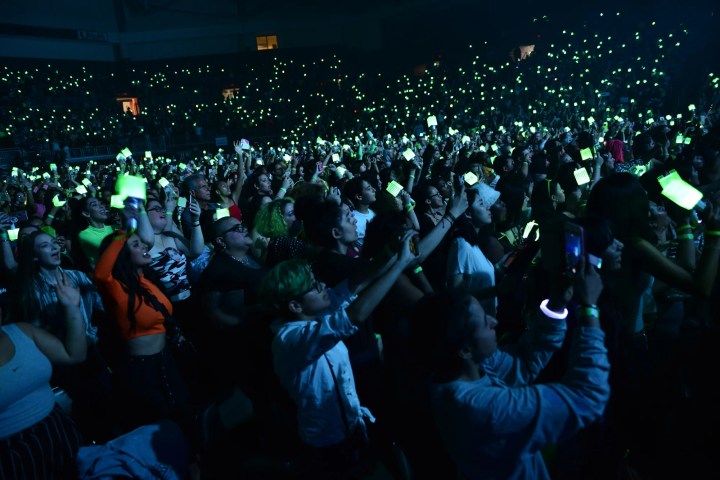
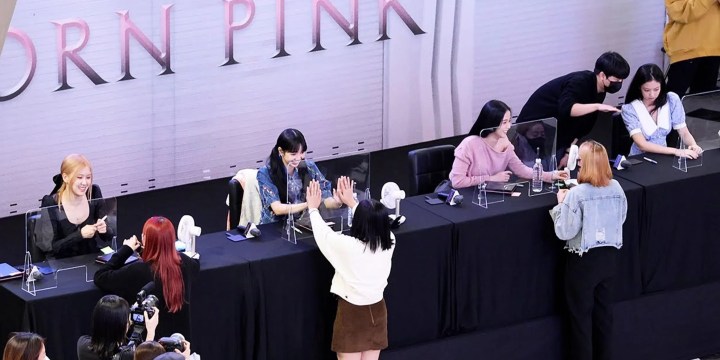
Within fandoms, displaying a collection, trading photocards, or using an official lightstick at a concert are gestures that validate the fan’s presence in that space. On resale platforms and trading groups, the value of an item is less related to its original cost and more to the symbolic meaning it carries. This network of exchanges reinforces the feeling of community and transforms the act of consuming into a shared experience.
The emotional dimension of consumption is so central that many fans describe purchasing products as a form of emotional support. The physical object comes to represent care, connection, and pride. That is why, even with the growth of digital media, tangible materials such as albums, posters, photocards, and lightsticks remain indispensable, allowing emotion to become visible and tangible.
Within this system, the fan is not a simple consumer, they actively participate in the circulation of products, create meaning, and assign value. The product gains the status of a symbol, and the shopping experience merges with the experience of affection. What is at stake is not just what one buys but what it means, a gesture of belonging, recognition, and love.

The digital expansion of K-Pop consumption
Technological advancement and the popularization of online platforms have transformed the way K-Pop is consumed. The relationship between artists and fans, once mediated by physical albums, live events, and collectible products, began to include an increasing number of digital experiences. What started as an extension of promotional activities became one of the pillars of the industry, redefining what it means to “be a fan” in a globalized context.
During the Covid-19 pandemic, digital consumption of K-pop stopped being an alternative and became the main form of interaction between artists and fans. Global isolation forced the cancellation of tours, fan meetings, and live events, leading companies to invest in virtual experiences to maintain their connection with the audience. Live-streamed concerts, video call events, and personalized messaging platforms grew explosively between 2020 and 2022.
During this period, applications such as Weverse and Bubble consolidated themselves as official communication channels, while new services, such as Fromm and Pocketdols, expanded the reach of digital interactions by enabling direct communication, exclusive content, and the creation of global communities. The pandemic accelerated a transformation that was already underway and consolidated the consumption of virtual experiences as an essential part of K-pop culture.
Weverse, launched in 2019 by HYBE Corporation, was a milestone in this transition. Initially created to centralize fan communities and exclusive content, the application evolved into a multifunctional platform that brings together live streams, forums, official merchandise, and even concert tickets. When in-person interactions were interrupted, Weverse became a space for coexistence and emotional consumption, connecting millions of users in real time.

In 2020, the company Dear U launched Bubble, a paid messaging service that offers direct and personalized communication between fans and artists. Each idol has their own space and the fan receives the messages privately, as if exchanging personal texts with them. Although not individual conversations, the app works similarly to a broadcast list, the artist can read messages from fans and reply in general. The model is simple, but highly effective in creating a sense of symbolic intimacy. The subscription becomes a continuous emotional experience and reinforces the feeling of closeness that K-pop has always cultivated.
Other platforms followed the same path. Applications such as Fromm and Pocketdols expanded the digital ecosystem with different formats of interaction and exclusive content. These environments create micro-communities and allow fans from any part of the world to participate in the daily lives of their artists. Consumption, once mediated by the physical object, now includes access, presence, and constant, though virtual contact.
Online concerts and digital events also became established practices. During social isolation, live-streamed concerts brought together audiences of millions of people in different time zones and generated revenues comparable to those of live tours. This model proved that emotional experience can be sustained without physical presence and opened new possibilities for the industry.
Ken Research estimates that the market for digital content and K-pop-related products has already surpassed 27 billion dollars. The figure shows that digital is not merely a complement but an essential part of the genre’s economy. In addition to expanding accessibility, these products redefine what it means to consume pop culture, the value lies not only in the purchased object but in the interaction, experience, and continuity of connection.

Psychological and social impacts of consumption in K-pop fandom
The psychological dimension of consumption in K-pop has been widely studied by researchers investigating the role of affection and social connections in fan experiences. A study by Laffan, O’Brien and Butler (2021), published in the journal Frontiers in Psychology, analyzed 1,477 K-pop fans in 92 countries and concluded that involvement with fandom is positively associated with self-esteem, happiness and a sense of belonging. The study shows that active participation in fan communities and the consumption of products related to artists function as factors of well-being and reinforce social bonds.
This relationship between identity and emotional connection was also observed by Arizabal and Yabut (2025) in a study published in SAGE Open. The authors found that “fandom identity” in K-pop can predict higher levels of mental health and life satisfaction, mediated by the feeling of social connection. In other words, consumption and participation in fandom activities not only express admiration but also fulfill a psychological function, offering a symbolic space for belonging and emotional support.
The research by He and Sun (2022), published in Frontiers in Psychology, examined the emotional process of detachment experienced by K-pop fans. The study observed that breaking away from fandom can generate symptoms similar to those of a romantic breakup, revealing how these relationships are lived as emotionally authentic experiences. The loss of symbolic contact with the artist, often associated with the end of consumption habits and participation in communities, directly affects fans’ emotional balance.
These studies indicate that consumption within K-Pop is not merely an economic behavior but a social and psychological practice that integrates affection, identity and belonging. Commodities function as mediators of emotional bonds, sustaining networks of support and well-being that extend beyond music and entertainment.
K-Pop and the new economy of emotions
Contemporary fan culture highlights a fundamental shift in how consumption is experienced and perceived. What was once limited to the exchange of material goods has come to involve emotions, identities and social ties. In today’s logic, products and experiences act as mediators of meaning, holding value not only for what they are but for what they emotionally represent to those who consume them.
Anthropologist Grant McCracken describes consumer goods as vehicles of cultural transfer, capable of carrying and transmitting symbolic meanings that shape the relationship between individuals and society. This perspective helps explain how the K-pop universe transforms albums, apps and objects into narratives of belonging, each loaded with meaning and memory.
Russell Belk complements this understanding by arguing that possessions form part of the “extended self,” a concept describing how people build identity through the objects and experiences they integrate into their daily lives. In fan practices, this extension of the self manifests in physical collections, digital memories and interactions that consolidate a shared identity.

The object is not merely a keepsake but evidence of an emotional and collective story. Each photocard, ticket, lightstick or virtual message becomes a form of emotional continuity, a way to exist within a global community without geographic boundaries.
Consumption within K-pop reveals itself as a language that articulates feelings and structures social ties. It builds bridges between different realities and transforms the act of acquisition into an experience of connection. The industry, in turn, feeds on this flow of emotions, organizing it into products, campaigns and platforms that prolong the sense of closeness. The result is an economy sustained by affection and symbolic reciprocity, in which value lies less in ownership and more in experience.
This new configuration of cultural consumption shows that objects have ceased to be neutral, they have become repositories of emotion, memory and identity. The strength of the phenomenon lies not only in its economic growth but in its ability to transform the market into a space of encounter, the commodity into an experience and the audience into a community. In this sense, K-Pop is not just a successful case of cultural industry but a mirror of human relationships in the digital age, where feeling, buying and belonging have become inseparable parts of the same gesture.
Thank you for reading! If you have requests for any future topics for ‘THE WAVE‘ please share them in the comments below, and we will consider them.
 HallyuTones
Leave a comment