
Hello and welcome back to HallyuTones – always focused on sound, stage and substance.
Today, I wanted to bring you something unexpected. As someone new to the K-Journalism space, I wanted to learn some unique insights from the perspective of someone well versed in working with some of the biggest acts in the K-Pop scene.
As HallyuTones has continued to grow, evolve and develop a stable reader base, I wanted to encourage more people to pursue K-Pop journalism. To truly learn more about artists and their music is so fulfilling, and helps make the K-Pop fandom space more engaging and positive for both artists and their fans.
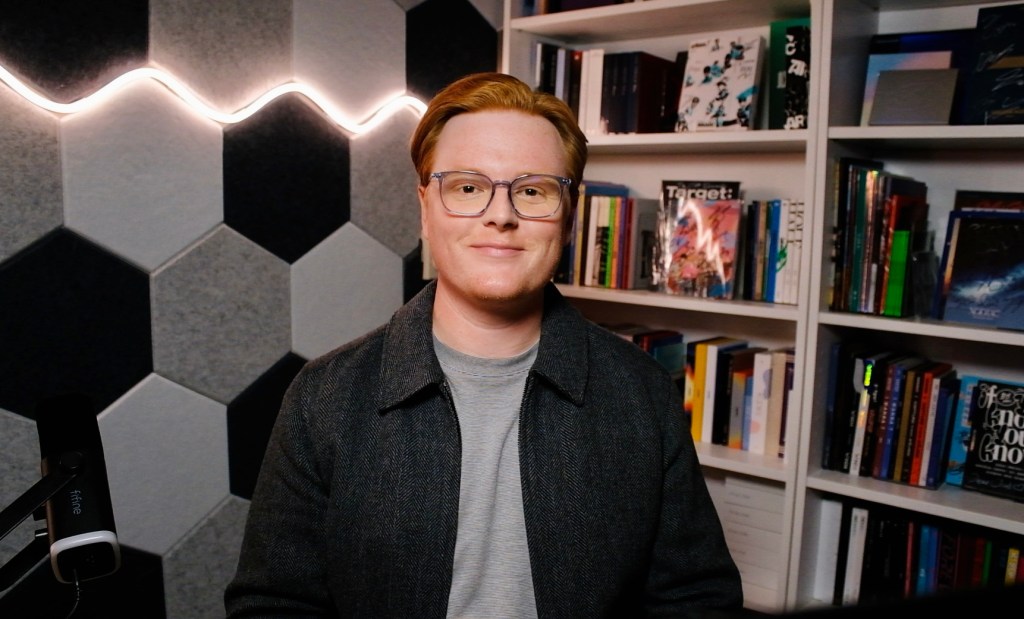
With this in mind, I had the opportunity to interview Clint Edwards, a videographer and K-Pop Interviewer, regarding his experiences, his career pathway, tips for new K-Journalists, and his favourite acts.

Interview Questions:
Q1. Please introduce yourself and your work!
Hi, I’m Clint Edwards. I’m a TV news journalist in Seattle, Washington. I cover crime, daily events, and local news local to Washington State. On top of that I also have two interview series. One for FOX 13 called ‘K-Pop Catch Up’, and I also recently started my own personal interview series for my own YouTube channel called ‘Fan Service’.
Q2. Could you tell us some more about the ‘K-Pop Catch Up’ series you host for Fox 13 Seattle, and what K-Pop artists you have interviewed so far?
This series, ‘K-Pop Catch Up’, first got it’s name after I’d done maybe 5 or 6 interviews with the station. I started interviewing K-Pop artists in 2021 when I was in Texas. I interviewed a couple there just by reaching out to their companies and asking to interview their group. Now, with FOX 13 Seattle, when I was first applying for the job, I told them I also have this side passion project where I interview K-Pop groups. I do all the work myself, I do the questions, I do the editing, I do the interviews, writing, everything. They offered to put it on the website and on YouTube and I’ve even done some on TV stuff talking about these interviews.
As far as the groups I have interviewed, I’ve interviewed dozens and dozens of groups from the newest group you can think of to groups like ATEEZ, IVE and ENHYPEN. I’ve even done P-Pop (Filipino groups) and Jpop groups as well. I typically don’t use the K-Pop Catch Up title for those, but yeah, I’m definitely expanding to other artists as well in Asia.
Q3. Based on your previous answer, are there any acts coming up outside of the K-Pop sphere that you might recommend to K-Pop listeners looking to diversify their music interests?
There’s quite a few. For Japan, I would recommend HANA. They are a girl group that was just formed off of a show called No No Girls. Their whole premise was giving a chance to girls that didn’t have a shot at their own company, whether it be because they didn’t think they looked the part, or their company didn’t treat them well. This was a group based on people who rose from the ashes. They have really great music. An artist I really want to recommend from Indonesia is ‘no na’. They are really making a name for themselves. They are a four member group and they are really showing that you don’t have to be in Eastern Asian countries to make a name for yourself in that pop space.
Q4. You also have your own YouTube channel where you host your series ‘Fan Service’. Could you tell us more about this series and how it differs from ‘K-Pop Catch Up’?
Since ‘K-Pop Catch Up’ is for work, and because I do it as a side project, it kind of became ‘just work’. I was interviewing groups I loved, but because I felt like I had to do it on a certain time limit to keep up with everything, I really wanted to have my own series to branch out on and ask questions that don’t make sense for FOX 13. FOX 13 is a local news channel, so my interview with a K-Pop group could show up next to a crime report. So I’m limited with the questions I can ask to make sense.
For ‘Fan Service’ I wanted to make an interview series that is more personal, more casual, getting to know the artists and their lives – why they do this, why they do that. It’s a more casual interview setting talking about some things that fans want to know about and not just promoting their new album. I’m a fan myself, I’ve been a fan for years. So there’s stuff I want to ask and want to know. It gave me a different platform to learn more about the artist in a way that doesn’t make sense for the audience of FOX 13.
Q4. How did your journey into music journalism and interviewing begin?
My background is actually in film. I studied communications in college, but my concentration was in the film industry and digital media. Throughout college I travelled to Atlanta, one of the big film hubs, to work on TV shows and movies. I originally wanted to stick with that, but when I graduated college I needed money to live. So I found a TV station who were looking for photographers. I applied, got the job and then they told me I was actually a videographer. I stayed in news and worked my way from Alabama to Texas and now Seattle.
Getting back to music journalism, I’m just a music fan. I always have been. I did marching band for 11 years of my life, love music and I wanted to use the platform I have at this TV station. I wanted to use that name, that job and see if I can work my way into that industry. During the pandemic I saw these groups doing Zoom interviews. I realised I could do that, so I reached out to a company of a group and was like, I know your group is debuting soon – it was OMEGA X. I asked to interview them and they sent me over to their PR contact in the US, who I work with still to this day.
By doing a couple of interviews I was able to make a name for myself, now they reach out to me (PR agencies and companies), so it really just started with one email. Being so repetitive, doing so many interviews and everything I was able to build the base to be where I am now. Working with smaller groups allowed me to get to know them more too. I still interview many of them today. I still interview OMEGA X, I just interviewed their first unit a couple of months ago. Starting small is not even a bad thing; new people often think they need to jump straight to BLACKPINK. Work your way up and you will learn so much.
Q5. What advice would you have for anyone looking to pursue music journalism, especially in the K-Music space?
You do not have to have a degree to do this. The biggest thing is that you need to do your research. For me, if I’m interviewing a group, I will never make it seem like I don’t know they are. Because at this point I know every group I’ve ever interviewed, I’m a fan of their music. If you’re wanting to do this content, get to know them ahead of time and listen to all their music, watch all their online content. If you’re not in a space to interview groups yet, start doing a blog, posting about news in K-Pop. Create your own little lane and show that you know what you are talking about. Once you build up that platform, you’ll be able to get your name out there and show that you do have content and ask for interviews.
Knowing your audience is key. For FOX 13 I know the audience that are watching my content, so I decided to make ‘Fan Service’ for another audience. My content gets shared predominately on X. I started out sharing my interviews with fan sites, searching up that group and messaging them to notify them about my interview. I still do that today. There are some people who have followed me for 4 years who I reached out to when I had just 1 interview, and they are still sharing my content.
You need to be a fan of that content, and be in with the people who are going to be watching it. You can’t be this inaccessible person, because then you’re not relatable. Every interview I do I ask fans for questions, because I am a fan myself, so I want to make sure that we are getting the questions answered that people want to know. Even if I’ve interviewed some of the biggest groups in the industry, I don’t forget the people that helped me build my platform and that’s fans.

Q6. Out of all of your interviews so far, what are some of your favourite memories?
Honestly, because I’ve done 85% of my interviews through Zoom, when I thought about ‘who’s the first group I’m going to interview in person?’ I never expected it to be NCT Dream. I asked the venue to see if I could cover their concert, and they connected me with their team and we ended up doing an interview. The most memorable experience is having NCT Dream walk into that green room with me and them being my first in person interview.
On top of that, I have great memories with OMEGA X and a group called EVNNE who are some of my favourite people. I’ve interviewed EVNNE for every single release that they have had, so 5 times so far. When you interview these groups multiple times, they get to know you and you get to know them – it’s such a fun experience interviewing them. You do lack questions after 2 or 3 interviews, but I love following the groups from where they were to where they are now.
Some people just interview a group once, but if I like your music I want to interview you for everything. Park Hanbin, one of the members of EVNNE is probably my favourite idol. I’m tweeting about him constantly, I’m tweeting about the group. Their fandom know me as being the guy who interviews them a lot, and the guy who is a Park Hanbin stan. It really helps talking about these groups outside of the interview as well, because you really get the fans behind you for your future content with them.
Q7. Do you have any advice for making video interviews feel authentic and flow comfortably?
Structuring out your questions in a natural conversation is key. The biggest compliment I get from people is that they love my questions, or that I’m asking things that they haven’t been asked before. With K-Pop, you’re going to be dealing with artists that do a lot of interviews. Sometimes I’ll be the 8th/9th interview of the day, so I’m thinking ‘what questions have they answered already’ and how I can sneak in a question to kind of change the mood.
I’ll start an interview always with asking them how they’ve been, how things are going for them. Then I’ll get into the question about the album, that’s what they are there to promote. But I always end with more fun questions. Sometimes what I’ll do with rookie groups especially is I will get to know them first by adding the fun questions to get them a little relaxed, because they may be nervous. So really, as far as making them feel authentic and flow comfortably, for me it’s about arranging the questions and making the questions interesting for them to answer.
You’ve also got to think about the audience of that group, and what the audience of that group wants to hear. Especially if you’ve got an older group that’s been around for a very long time, the fans are not going to care what their favourite ice cream flavour is. They want to know about the music and the process behind it. It really helps knowing the audience of that group, who their fans are, and the age group of their fans. Then tailor your questions based off of that.
Once you have a structure, it’s like a formula at the end – all my interviews are structured the exact same way. It took me a few interviews to work out the best way for it to flow.

Q8. What are some of the challenges you face as a video journalist working in Kpop?
The journalism industry is an industry that you can quickly become overworked in. For me as a video journalist primarily for TV news, news is happening every second of the day, 24/7. We don’t really have holidays. My work schedule sometimes involves night time shifts, then day shifts, and then a 5am shift. There’s always something going on, and you’re outside all the time, constantly overworked.
Transitioning into K-Pop, I’m doing K-Pop journalism outside of that, so I’ll come home tired from work but I’ve got to write an article, edit an interview etc. Getting overworked almost to the brink of getting burnt out,is the biggest challenge. But then I constantly have to remind myself that I am doing something that so many people want to do, and because I enjoy K-Pop so much I’d be so sad if I didn’t get to do this. Then once I have that final product, that final edit, or it finally gets posted for fans to comment on and enjoy, that’s when it is put into perspective that I’m so lucky to get to do what I’m doing.
I used to be focused on how many likes or shares posts got, but then it got to a point where I found more joy out of seeing someone commenting that they’ve just watched my video and are now checking out a group and their music. That then became the biggest part of it for me, reminding me why I wanted to do this originally. I wanted to get this K-Pop space out to more people in my country, my state.
Q9. How and when did you first discover K-Pop, and who was the first artist that you followed?
The first group I ever heard was 2NE1. A friend from high school listened to them, I heard them but I wasn’t really checking them out. Obviously we then had the PSY Gangnam Style takeover. It wasn’t until BTS’ Spring Day that I realised I love this style of music. From that, the algorithm made me discover Ailee, my favourite soloist. 2019 was when I would say my realisation that I am obsessed with K-Pop came, with debuts like CIX, ITZY, AB6IX – those were such good releases.
The first group I ever truly stanned was ASTRO. Even though as a group they aren’t producing a lot of music, we do have Jinjin and MJ coming out with their unit soon. I remember when I first saw ‘Blue Flame’, that was the first album I ever bought. That was when I realised K-Pop isn’t just the bubblegum pop genre that most people think it is. To this day I have every single album, 2 light sticks… I’m obsessed with ASTRO.
Q10. What do you think makes K-Pop unique and why do you feel it resonates with so many people around the world?
I think what got me into K-Pop was seeing the amount of work and the production quality that is put into these artists. We all know that the trainee system for K-Pop is insane, I feel that that’s the dark side of K-Pop that most people know if they don’t listen to it. But throughout all this, we are getting incredible production quality, choreography, vocals.
I think in the West, especially in America we haven’t really seen that type of quality since the early 2000s, when we had these groups like NSYNC, Backstreet Boys and Destiny’s Child. That’s what people long for, that era of music again, and K-Pop is really giving us all of that. American pop stars in the past few years weren’t showing off big choreographies. There weren’t massive music videos. Whereas in K-Pop, music videos are treated as events. People are counting down for the release of a music video.
Another thing that makes K-Pop unique to me, is the amount of content that you get from these groups. American artists will put out an album, go on tour, maybe go on a talk show and that’s about it. But for K-Pop, they put out an album, go on tour, do multiple variety shows, perform the music every week – there’s so much content for people to consume. That’s why it has become as big as it has, because we are getting so much more content from the K-Pop industry than we are from any other music industry. People want to know about their favourite artists’ lives, and they are really giving us that.
Q11. What are your hopes for the future of the K-Pop industry?
A positive change I would like to see is that these artists are not seen as products by their company. On a less serious level, K-Pop is heavily oversaturated with new groups debuting every day. I don’t see how artists outside of the Big 4 think they are going to break through into this industry with how oversaturated the space is. Personally for me, I also feel like a lot of groups these days are trying to please the Western audience, and losing what people got into K-Pop for. I think there is a danger of losing what made the genre special to begin with by trying too hard to break out into certain countries.
Q12. Who is your favourite K-Pop artist of all time and what do you love the most about them?
My favourite soloist would be Ailee. She is such an incredible artist and person. She is one of my dream interviews to this day. One group that has done a lot for this industry is EXO. They are all such incredible artists. They have all managed to create such successful solo careers outside of the group. They are more than just a K-Pop group. I believe there’s a difference between an idol and an artist sometimes, so I think that EXO are not just K-Pop idols, but are artists. Their talent is unmatched, and at that time in 2012/13 when they debuted, they weren’t focused on making a TikTok hit, or becoming big in America. It was just great artists producing great music for a smaller online community.
Q13. With so many K-Pop acts currently active and with such large fandoms, it can be a challenge for smaller artists to gain recognition. What recent acts/underrated artists would you recommend to K-Pop fans?
Honestly, most of the groups I interview are smaller or ‘nugu’ artists as people like to call them. H1-KEY are one of the biggest groups for me. I know they had a hit with Rose Blossom, but they just released their latest album. They are really bringing the fun back to K-Pop. They are giving us that summer SISTAR style from back then. They are the girl group I want to see more love for.
82MAJOR is a group that is producing some of the best quality music videos I have ever seen. They are working on their own music, creating songs just for festivals – they will go to a festival and make a song just for it. The music video storylines and the cinematography is so good.
LUN8 have some of the best music that is not talked about. They released a single called ‘Pastel’ last year, one of my favourite songs of the past 5 years at least.
I also recommend an American based K-Pop group called RE:WIND. It is a 3 member group based here in the US, the first all Asian-American K-Pop group. They just released their 1st EP. They are the group perfectly bridging the gap between American groups and K-Pop. Their latest release, ‘Little Too Late’, is 4:33 seconds long! They told me that they were on Zoom changing their lyrics from all the way across the country. Together they decided to make the song longer instead of narrowing it down and shortening it. They are aiming to give an American feel with a K-Pop style. They are definitely a group that I think people need to check out and I think are heavily underrated.
Q14. If you could choose one artist that you haven’t yet interviewed, but would like to interview, who would that be and why?
One of them would be EXO. I have interviewed Chen before and just talking to him was such a big thing for me. I want to ask him about their career, how the K-Pop industry was back then, how they have seen it change. I want to talk to them on a deeper level than just promoting a new release.
Another one would be Dreamcatcher. They are one of the few groups doing something different. Their journey going from MINX into their style now is so unique to them. I really want to talk to them about that and their thoughts on it. Their music is not comparable to anybody, I really want to interview them for sure.
Q15. Lastly, do you have a message for fans of your work or for K-Pop Catch Up fans?
For the people who watch my work, thank you so much. I talk to you guys all the time on social media and I’ve seen some of the same accounts on X/Instagram today still liking and engaging with my content that I saw when I first started. So thank you so much for just enjoying my content and for the compliments on my work.
For anyone who wants to get into this, it is not something you can’t do. I’ve seen many people do it with no journalism experience. All it takes is drive and the passion for K-Pop and for music to do it. You don’t need a degree. If you have an X account, if you have access to a blog, you can start from the bottom and work your way up. The most important thing is you have to love what you’re doing in order to make it happen, so that it doesn’t become like work and so you don’t get burned out.

Thank you so much to Clint Edwards for taking the time out of his busy schedule to answer our questions. As someone new in this space, it was so important to me to try and encourage others to write too and join in this wonderful community. I hope that this article inspires some of you to pursue K-Journalism – it can be a lot of work, but it really is a lot of fun!
If you are interested in volunteering to join our growing team, please send us a message @HallyuTones or @h1mixx on X – we would love to help others gain experience writing, interviewing and creating in this space.
Links to Clint’s socials are below:
Clint Edwards YouTube: https://www.youtube.com/@Clint_Edwards
FOX13 K-Pop Catch Up Playlist: https://www.youtube.com/watch?v=UxUZ0vpSork&list=PLk-8ywDioaFEl_4dSOVsRqqhUq63Gn2zq
Clint Edwards X: https://x.com/Clint_Edwards
 HallyuTones
Leave a comment